Santa Fe Wood Flooring has handled wood flooring in Valencia and the rest of eastern Santa Fe County for more than 20 years, and the work here rarely looks like a tract job. Houses are few, their ages and ownership are mixed, and each estimate starts with the building in front of us rather than a template carried over from a subdivision.
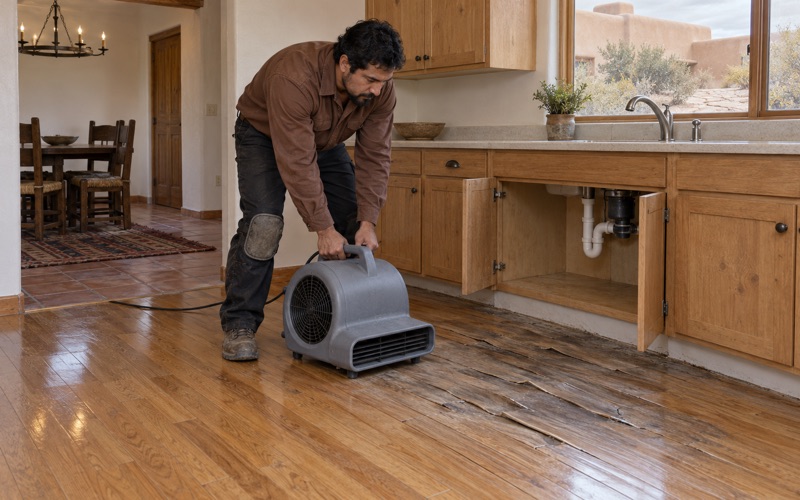
Most calls fall into three groups: refinishing a worn floor, repairing boards that have gapped, cupped or taken on water, and installing new solid or engineered flooring. Before we order a single carton, we take moisture readings in the wood, the subfloor and any concrete, and we write those numbers down so the material choice rests on measurement instead of habit.
The questions we ask on the first visit are practical ones. Who lives in the house, and can they stay during the work, or is it a rental with a tenant leaving on a set date? Is there radiant heat under the floor, or a tile threshold the new boards have to meet? Those answers decide the plan more than the square footage does.
Floor Work Off I-25 Exit 297
Valencia is an unincorporated community in Santa Fe County, and almost every trip we make there runs through one interchange. Exit 297 on Interstate 25 and US 84 connects the highway with isolated sections of old US 66-85, and there is no outlet from that exchange. Valencia’s houses sit along that old corridor rather than in a planned subdivision.
Reaching Valencia from the Interstate
Because the interchange leads nowhere else, a crew heading to Valencia is committed once it leaves the interstate. We load the truck for the whole job before we get off at Exit 297: sanding abrasives in every grit the floor may need, extra finish, spare boards for weave-in repairs, and the moisture meters. A missing part means a round trip back toward Santa Fe, so a complete load keeps a two-day refinish from turning into three.
The diamond interchange ties into Jesus Gonzales Road and Sabino Gonzales Road, and we confirm which side of the highway a house is on when we book. On a small, scattered site that one detail saves real time on the first morning.
Where the Fire District Line Falls
Hondo Fire District describes its coverage as roughly the region between Rabbit Road and the Valencia Exit on either side of I-25. We mention it because it is a useful marker for how the county itself draws lines out here: Valencia sits at an edge, not in the middle of a service area. Homeowners along this stretch tend to know exactly which side of a boundary they are on, and we plan access and parking with the same care.
Scheduling Around the Glorieta Mesa Forecast
Valencia falls in the National Weather Service forecast zone NMZ212, Glorieta Mesa Including Glorieta Pass. Before a sanding or finishing day we read that zone’s forecast rather than the Santa Fe one. Finish cures on its own schedule, and doors and windows stay shut while it does, so a day of wind or cold changes when we can ventilate and when we can bring the next coat in.
Looking for wood-flooring closer to Lamy? See Wood-Flooring Services in Lamy.
Wood Floors in Valencia’s 1950s Houses
The Census Bureau’s American Community Survey counts 39 housing units in Valencia: 16 built in the 1950s, 8 in the 1990s and 15 between 2000 and 2009, with none recorded in other decades. For a place this small the margins are very wide, so we treat those figures as a rough picture of the mix, not a precise count. What they do tell us is that a meaningful share of the houses were built before 1960.
What We Check First in an Older House
We never assume what species or grade is under a rug or a later layer of flooring. On a 1950s house we pull a floor register or lift a threshold where we can, identify the wood, and measure how much material is left above the tongue. That thickness decides whether a full sand is safe or whether a screen and recoat is the better choice for the life of the floor.
We also check fasteners and board ends. Winter squeaks in an older floor often come from boards that have dried and shrunk around loose cleats or nails, and some of them close up once the indoor air holds a steadier relative humidity. We give you a written humidity target before we recommend replacing anything.
Lead-Safe Sanding Before Any Old Finish Comes Off
Every one of those 1950s units predates 1978, so the federal EPA Renovation, Repair and Painting rule is part of the conversation, especially around painted baseboards, door casings and shoe molding. We work lead-safe on pre-1978 housing before any old finish is sanded: the room is contained, dust is controlled at the machine with a dustless sanding system, and cleanup is done to a standard rather than by eye. That matters more in a small house, where the living space and the work area are rarely far apart.
Patching Old Heater Openings
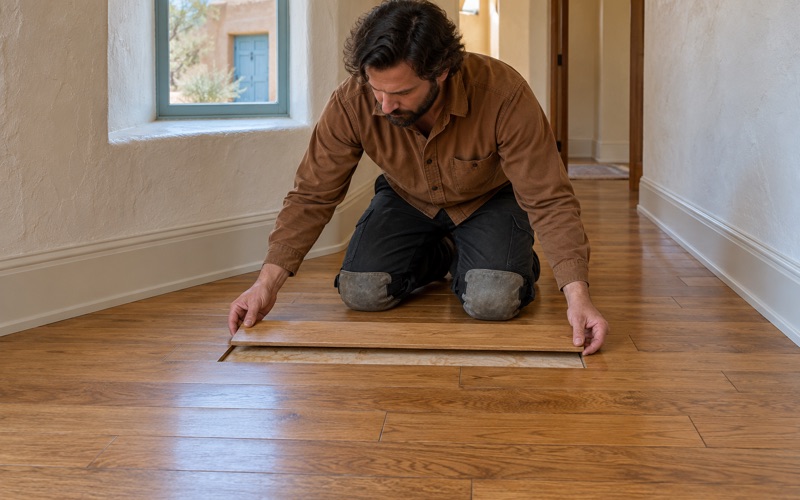
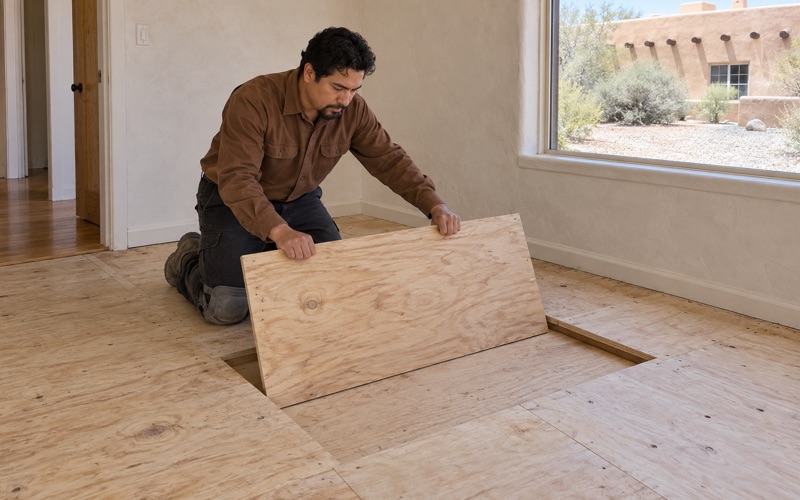
Houses of this era often carried a floor furnace or a wall heater that has since been replaced. When the old opening in the floor was covered with a plywood square, or the wall heater left a gap along the baseboard, we cut back to sound wood and weave matching boards into the existing field. Staggered joints carry the pattern through the patch, so after sanding and finish the repair reads as part of the original floor rather than a square set into it.
Refinishing Floors in 1990s and 2000s Homes
The newer cohort, the units built in the 1990s and between 2000 and 2009, brings a different set of problems. These floors are younger, but many are now two or three decades into their first finish, and the wear shows in traffic lanes, at kitchen thresholds and wherever a pet has had accidents.
Screen and Recoat or a Full Sand
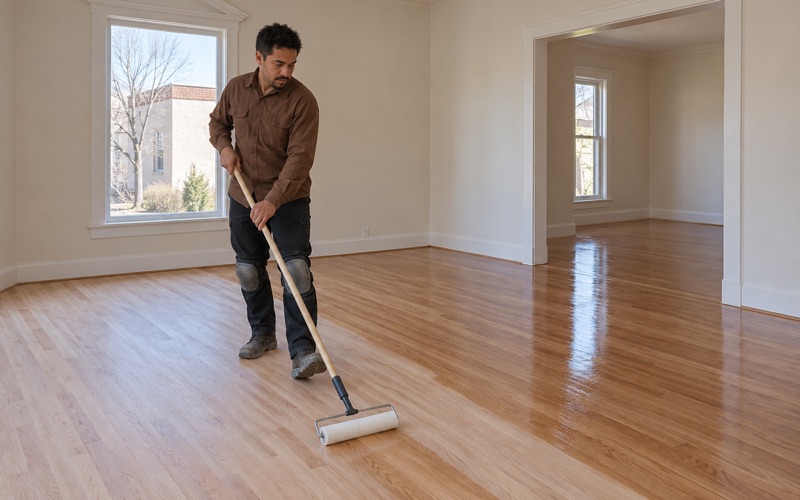
If the finish is dull and scratched but the wood itself is clean, a screen and recoat is often enough: we abrade the existing finish and add fresh coats without sanding to bare wood. Once the finish is peeling, the color has shifted toward orange oak, or pet urine stains have gone gray and black into the grain, a full sand with a proper grit sequence is the honest answer. We look for stain problems before we quote, because replacing a few stained boards costs less than trying to sand them out.
Engineered flooring from this period needs a closer look. We check the wear layer thickness before recommending any sanding at all, and some engineered floors can only take a screen and recoat.
Finishes for a House You Are Living In
Most owners in a house this size stay in it during the work. We choose finishes that meet the federal architectural coatings VOC limits in 40 CFR 59 Subpart D and offer low-odor waterborne polyurethane for occupied homes. Oil-modified polyurethane and hardwax oil finish have their place, and we explain the tradeoffs in sheen level, cure time and upkeep before you decide.
Radiant Heat and Tile Transitions
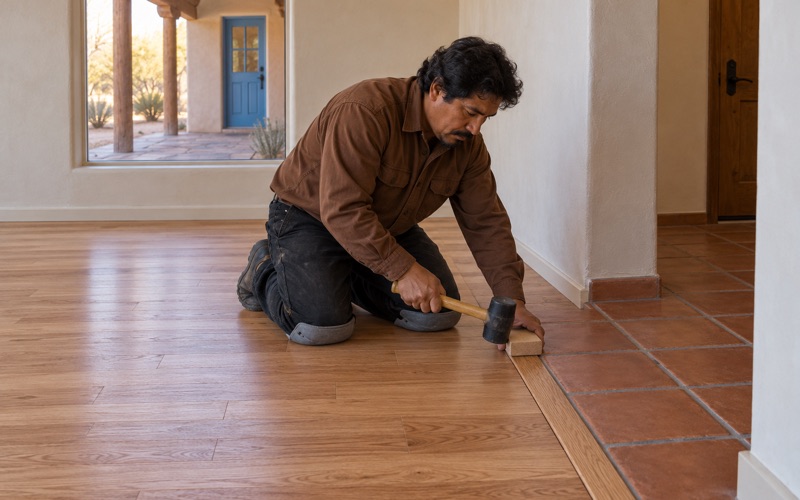
Some houses from these decades carry hydronic radiant floor heating. Wood over radiant heat is planned to the NWFA radiant heat guidelines, which cap the floor surface at 80 degrees Fahrenheit and limit temperature changes to 5 degrees a day, and they rule out a setback thermostat. Where new wood meets Saltillo tile, brick or flagstone, we plan the transition, whether a reducer strip, a T-molding or a flush detail, so there is no lip or gap at the doorway.
Wood Floors in Attached Rental Units
Tenure in Valencia splits in an unusual way. Of 23 occupied units in the survey, 15 are renter households, and every one of them lives in a one-unit attached structure. The 8 owner households in the sample all live in mobile homes. That makes rental floors a large part of the local work, and it changes what the landlord needs from us.
Itemized Estimates for Deposit Deductions
Under New Mexico’s Uniform Owner-Resident Relations Act, a landlord has 30 days to return a deposit or itemize the deductions. When a tenant moves out and a floor shows damage beyond normal wear, we provide a written, itemized estimate that separates board replacement, refinishing and cleanup, so each line can be matched to the security deposit itemization. We describe what we see and what it costs to fix; the deduction decision stays with the owner.
Turnovers on a Known Date
Attached units share walls, and in a small cluster a neighbor is always close by. We schedule turnover work between one tenant and the next, choose low-odor finishes that suit a shared building, and hand over a written cure schedule that gives the date the unit can take furniture and a new tenant. For an owner managing a short-term rental, we build the same schedule around booked dates.
Water damage is the other common rental call. We trace a leak to its source before replacing anything, including a leak in a radiant heat line, and we document the damage with photos and moisture readings an insurance adjuster can use.
Owner-Occupied Homes Along the Same Roads
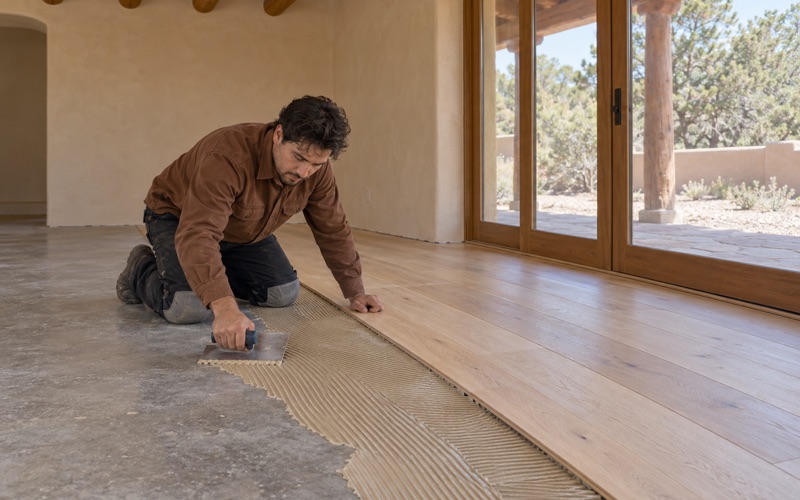
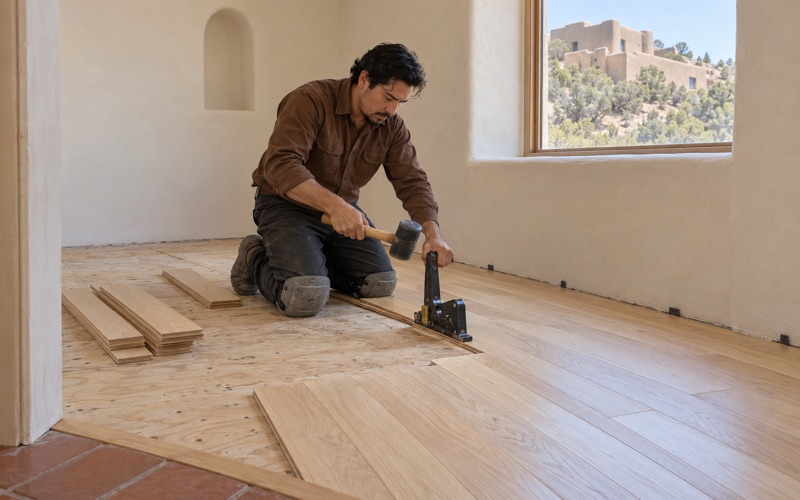
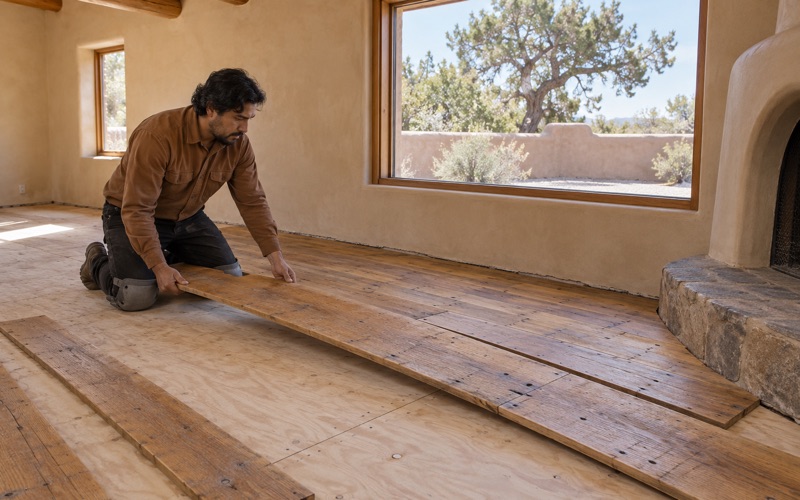
The owner-occupied homes in the survey are mobile homes, and wood flooring in them is a question of the subfloor first. We check whether the plywood or OSB subfloor is flat, dry and firmly fastened, then recommend a floating, glue-down or nail-down installation to match what we find. Reclaimed and wide plank wood is acclimated inside the house before it goes down, so boards milled somewhere wetter do not open up in the first winter.
- 20+ Years Experience
- Written Moisture Readings
- Itemized Written Estimates