Santa Fe Wood Flooring brings more than 20 years of work on wood flooring in Santo Domingo Pueblo and the surrounding high desert to homes that are often changing hands in an unusual way. Many families here first lived in a house as renters under a housing program, and some of those homes can later pass into their ownership. When that happens, the floor stops being someone else’s maintenance item and becomes yours to keep.
We repair, refinish and install wood floors with that shift in mind. Our first visit is a measurement visit: we read moisture in the boards and in whatever sits beneath them, write the numbers down, and treat any gap or squeak as a question about indoor humidity before we call it a defect. You leave with a written, itemized estimate rather than a verbal ballpark.
This page explains what we look for in newer housing authority homes, how a floor should be assessed when a rental becomes a family’s property, and how we approach older houses in the same community. It also covers how we try to work as respectful guests.
Floors in Housing Authority Homes
The Santo Domingo Tribal Housing Authority, known as SDTHA, was established in 1995 and serves as the pueblo’s tribally designated housing entity. According to a Minneapolis Fed case study, a key part of its approach has been leveraging its NAHASDA housing block grant together with other mainstream housing and economic development funding. That financing mix is why a good share of the newer housing here was built as tax-credit rental stock.
The first tax-credit homes
Between 1999 and 2001, SDTHA built 20 Low-Income Housing Tax Credit rental homes on a 13-acre tract. The case study describes that project as one of the first tribal LIHTC developments in New Mexico. Homes from that period are now past two decades of daily use, which is the age when a floor usually needs more than cleaning.
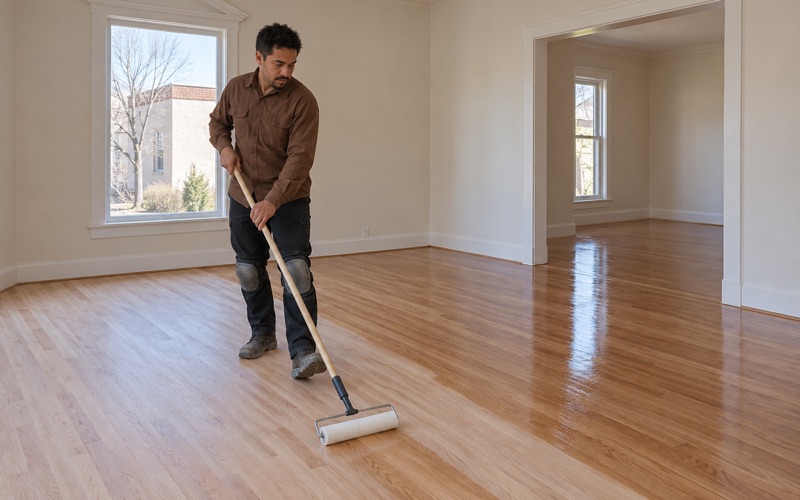
On floors of that age we typically see worn finish in the kitchen and at exterior doors, dents from furniture, and seams that open in winter and close again in summer. None of that means the floor has failed. Most of it responds to board replacement, a screen and recoat, or a full sanding and refinishing, depending on how much wear layer remains.
The Wa-Di development
A later project, the Wa-Di Housing development, sits on eight acres of the Kewa Reservation and holds 41 affordable rentals in a mix of single and two-story units. The New Mexico Mortgage Finance Authority awarded the tax credit allocation in 2015, and the Minneapolis Fed describes the development as launched in 2017. Each home was designed with passive solar heating and comes with a small, well-ventilated work shed intended as studio space for resident artists and craftsmen.
Passive solar design generally depends on sunlight reaching the interior through windows, and that light lands on the floor. Wood in a sunny room can show sun fading or uneven color where rugs once sat, and boards near warm glass can dry faster than the rest of the room. We note where the sun falls before recommending a species, a stain or a sheen level.
The work sheds give residents a place for studio work outside the main living space, which spares the floors inside. Grit carried in on shoes still acts like sandpaper on a finish, though, so we suggest a mat at every entry and a dry sweep before any mopping. Small habits like these decide how long a finish lasts between refinishing visits.
Two-story units and stairs
In the two-story units, stairs and upstairs landings take concentrated traffic. Treads wear in a line down the center while the edges stay bright, and a squeak upstairs is often heard in the room below. We look at fastening and at humidity together, because in dry months many winter squeaks quiet down once the boards regain some moisture.
Looking for wood-flooring closer to Española? See Española Wood-Flooring.
From Program Rental to Family Ownership
Tax credit housing carries a 15-year compliance period. The Minneapolis Fed case study explains that at the end of that period the investor has received its full tax benefits, and the units may be converted from rental to homeownership. The case study says the Wa-Di homes were built with that same possibility of homeownership once the rental compliance period expires.
Ownership is already the norm here. Census estimates show 92.4 percent of occupied homes in Santo Domingo Pueblo are owner-occupied, and housing has been described as scarce, with options extremely limited. When a family is likely to stay in a home for a long time, decisions about the floor are worth making carefully.
Assessing a floor at the handoff
A floor that has served as a rental for 15 years has usually been maintained to keep the unit in service, not refinished to an owner’s taste. At a conversion we record the condition room by room: finish wear, stains, loose or damaged boards, and moisture readings in the wood and the subfloor. Those notes give the new owner a baseline for planning.
We also separate what is cosmetic from what is structural. A dull finish can wait, while cupping, crowning or soft spots near a bathroom deserve attention first. We explain which is which so you can decide the order and pace.
Planning repairs over time
Many new owners prefer to spread work out rather than do everything at once. A common sequence is to fix damaged boards and any moisture source first, refinish the high-traffic rooms next, and leave bedrooms for later. We write that plan down so the pieces fit together when you are ready.
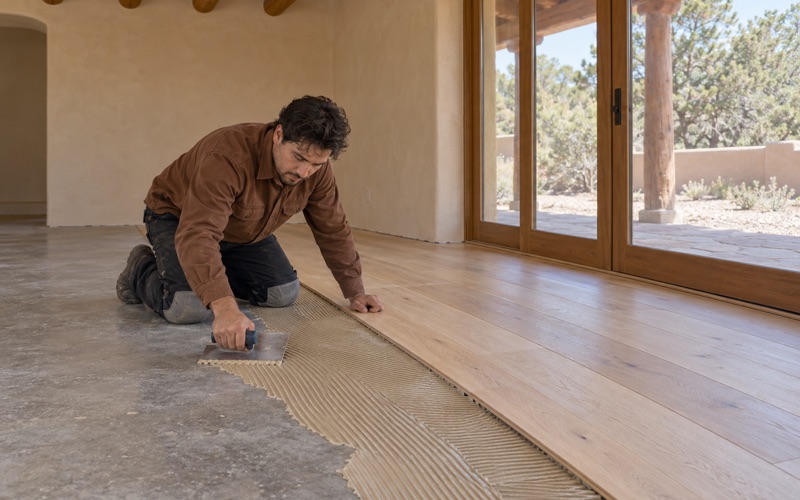
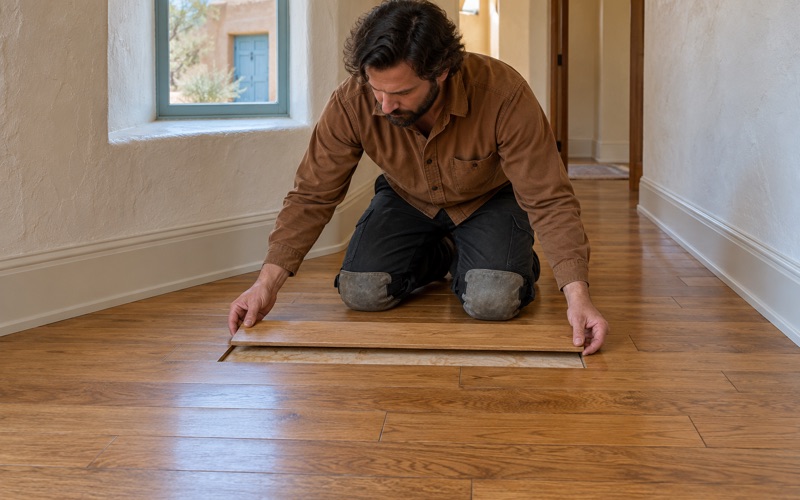
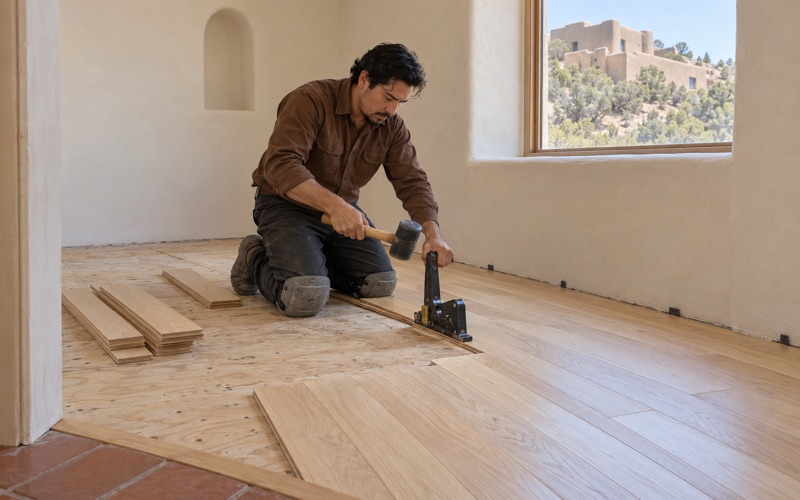
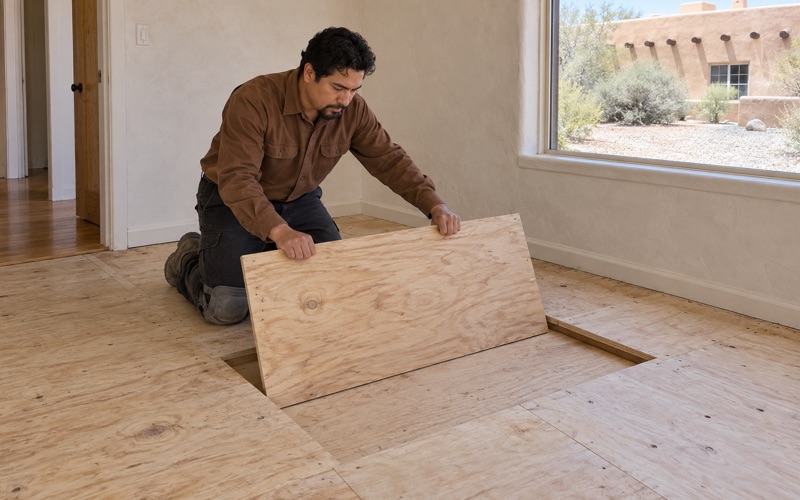
When boards must be replaced, matching matters. We identify the species and board width already in place, whether red oak, white oak, maple or something else, and weave new boards in so the repair blends after refinishing. If an owner would rather replace a floor entirely, we compare solid hardwood with engineered core construction and explain how wear layer thickness affects how many future refinishing cycles the floor can take.
If you are still renting and expect to buy later, a written, itemized estimate can also be useful for conversations with whoever manages the unit today. We document what we find with photos and readings, and we leave the decisions to you.
Caring for Newer Homes and Older Houses
The housing stock here spans a wide range of ages. Census estimates count 410 housing units, with 41 built between 2010 and 2019 and 81 built in 1939 or earlier, roughly one in five. The estimates carry wide margins, but the pattern is clear: new tax-credit construction stands alongside some very old houses.
Newer tax-credit homes
In newer homes the most common problems we see come from dry air rather than age. Boards installed in one humidity level and then heated through a New Mexico winter can open visible gaps. We give owners a written indoor relative humidity target and explain how a whole-house humidifier or a room unit can help keep the wood near its equilibrium moisture content.
Routine care matters more than any single product. Felt pads under chairs, walk-off mats at the doors, and a damp rather than wet mop will extend a finish by years. When the finish does wear, a screen and recoat with a low-odor waterborne polyurethane lets a family keep living in the house while the work cures.
In busy households, pet urine stains and spills left overnight are a frequent cause of dark marks. A stain that has soaked deep into the wood usually calls for board replacement rather than sanding, and we tell you plainly when sanding will not remove it.
Attached homes and older houses
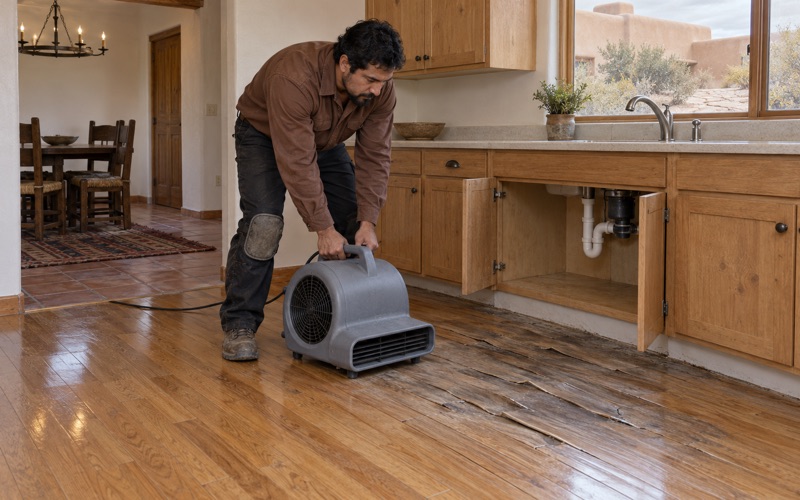
About 20 percent of units here are one-unit attached homes, where a shared wall can mean a shared plumbing run. When we find water damage we trace it to its source first, whether a supply line, a drain or a leak in a radiant heat line, and we document it with photos and moisture readings an adjuster can use.
Older houses call for different habits. On any house built before 1978, we follow lead-safe work practices under the EPA Renovation, Repair and Painting rule before an old finish is sanded. Where a floor furnace or wall heater has been removed, we patch the opening with boards woven into the existing floor so the repair does not read as a patch.
Radiant heat and transitions
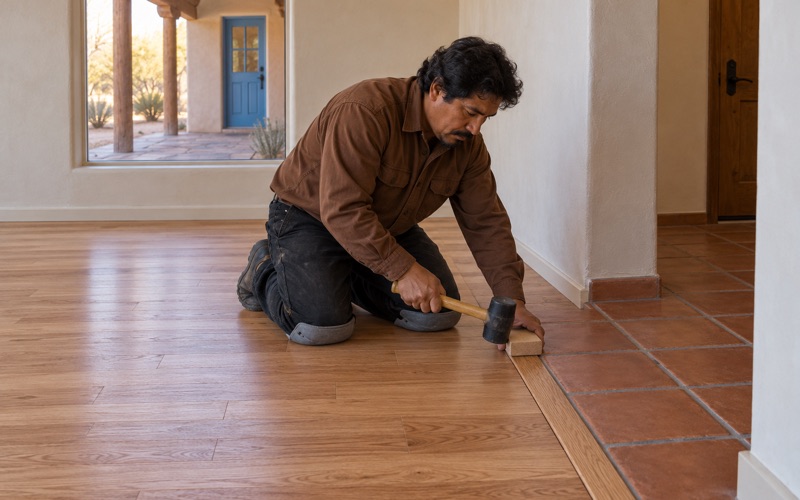
If a home has hydronic radiant floor heating, we plan wood over it to the NWFA radiant heat guidelines. Those guidelines cap the floor surface at 80 degrees Fahrenheit, limit temperature changes to 5 degrees a day, and rule out setback thermostats. Where wood meets Saltillo tile, brick or flagstone, we plan the transition so the doorway has neither a lip nor a gap.
Working Respectfully in Kewa Pueblo
In 2009 the pueblo officially changed its name to Kewa Pueblo, and the Census Bureau still lists the place as Santo Domingo Pueblo, a census-designated place in Sandoval County. Kewa Pueblo is a federally recognized tribe with its own government. We come to a home here because a family has invited us, and we act as guests.
Who to consult before work begins
We do not presume to know which tribal or housing authority rules apply to a given home or project. Before scheduling, we ask the homeowner or tenant to confirm with the appropriate tribal offices, and with the housing authority if the home is still part of a program, what is needed for outside work. We plan around that answer rather than supplying one of our own.
That matters most in a home that is moving from rental to ownership, where responsibility for the floor may still be shifting. We put our scope, materials and schedule in writing so everyone involved can see exactly what is proposed.
Weather and scheduling
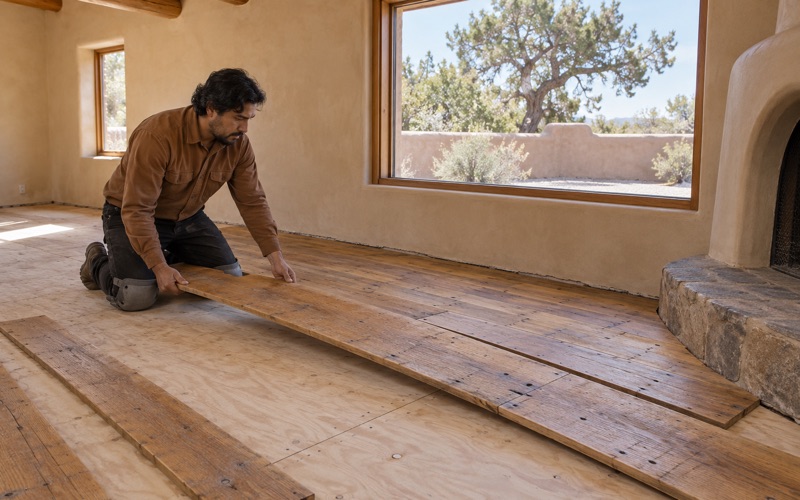
The National Weather Service places Santo Domingo Pueblo in forecast zone NMZ218, the Santa Fe Metro Area. We check that forecast before delivering wood or applying a finish, because wind, dust and sudden temperature swings affect acclimation and cure times. Wide plank and reclaimed boards acclimate in the house before installation, so wood milled somewhere wetter does not open up during its first winter.
What to expect on the job
We keep dust down with a dustless sanding system where the floor allows it, protect adjoining rooms, and choose finishes that meet the federal architectural coatings VOC limits. We sequence the rooms so the kitchen and a path to the bathroom stay usable for as long as possible. At the end we give you a written cure schedule, so you know when furniture can go back and when the rooms are ready for daily life again.
- 20+ Years Experience
- Written Moisture Readings
- Itemized Written Estimates