Santa Fe Wood Flooring has spent more than 20 years on wood flooring in San Ildefonso Pueblo and the surrounding valley, and most of the calls we take start with the same complaint: the boards have opened up, the finish has gone dull, or a floor that looked fine last spring now shows dark lines between every plank. We treat that as a question about air and moisture before it becomes a question about sanding or new material. A floor that is sanded, stained or replaced without fixing the conditions that moved it will usually move again.
Our work covers installation of solid hardwood and engineered floors, refinishing, board replacement, and repairs after water damage. Before we order anything, we read the moisture content of the wood, the subfloor and any concrete, and we write those readings down so you have them. That record is what lets us tell you whether a gap is seasonal, whether a new floor is ready to go down, and what humidity the house needs to hold afterward.
What follows is how we approach floors here specifically: the drying pattern the Pueblo itself has documented, the age of the houses we tend to walk into, and the practical steps that keep a wood floor stable through heat and long stretches without rain. None of it replaces a look at your own floor, but it explains the questions we will ask when we visit.
Heat, Drought and What Long Dry Spells Do to Wood
Wood is a sponge that never stops trading moisture with the air around it. When the air stays dry for months, boards give up water, shrink across their width and pull apart at the seams. That movement is normal in small amounts, but a sustained dry climate pushes it further than most flooring products are designed to tolerate without help.
Dry spells leave marks in two places: the wood itself and the coating on top of it. Both can be managed, but they call for different fixes, and sorting out which one you are looking at saves money.
What the Pueblo’s Own Plan Records
The Pueblo de San Ildefonso published a climate action plan through its Department of Environmental and Cultural Preservation, dated May 4, 2022. It states that the Pueblo is already experiencing hotter temperatures and extreme heat, droughts, wildfires, storms and flooding, and changes in snowmelt and streamflow. It also records that New Mexico’s portion of the Rio Grande was drier every year from 2009 to 2014.
We take that plan seriously because it describes the conditions a floor lives in. We are not forecasting the weather; the Pueblo has already written down what it is seeing. Hotter days and longer dry periods mean lower indoor humidity for more of the year unless something in the house adds moisture back.
Gaps, Checking and Cupping in Reverse
Warming dry outdoor air as it comes inside lowers its relative humidity further, so a hot season and a dry season working together leave very little moisture in the rooms. A wood floor responds by settling toward a lower equilibrium moisture content, which shows up first as board gaps and then, if it goes on long enough, as checking and splitting along the grain. Winter squeaks often trace back to the same shrinkage, as boards loosen around their fasteners.
This is why we treat most gap and checking calls as a humidity question first. Filling gaps in a floor that is still drying only packs filler into seams that will keep moving, and it can crack out or squeeze up when moisture returns.
Gaps that open in the dry months and partly close later are seasonal, and a stable humidity target is usually the right answer. Gaps that stay open year-round, or boards with fine cracks running along their faces, suggest the wood has dried below where it was installed and may not come back on its own. Wide boards show this more than narrow ones, because each board moves across a greater width.
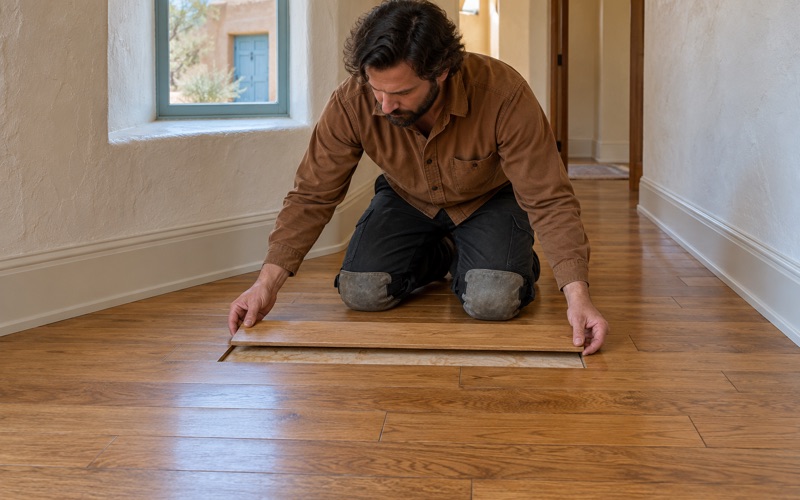
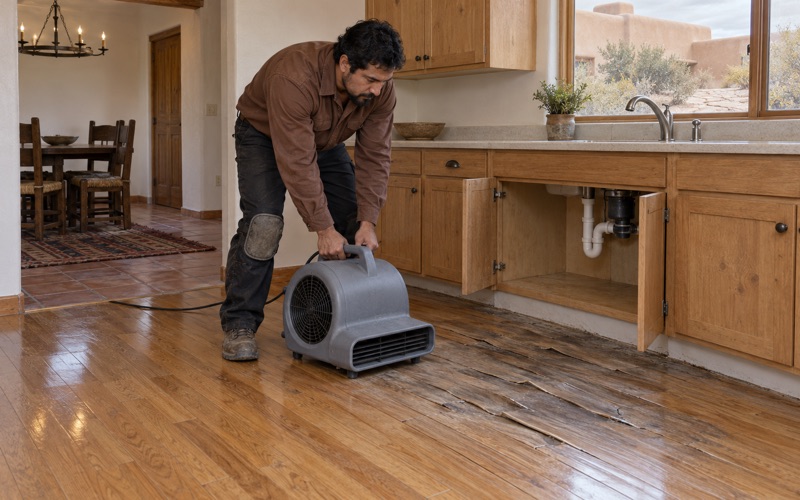
Occasionally we see the opposite problem after a dry floor meets a sudden source of moisture, such as a leak or a wet mop left standing. Dry boards take on water fast and can cup, with edges higher than the centers, or crown if the floor was sanded while cupped. We measure moisture before deciding whether a board needs replacement or just time.
Finish Wear From Heat and Sun
Strong sun through south and west windows fades wood and ages the finish. Red oak and many other species shift in color, and older oil-modified polyurethane can amber into the orange oak tone many homeowners want to get away from. Heat and dry air also make finishes more brittle, which speeds up wear in walkways and near doors.
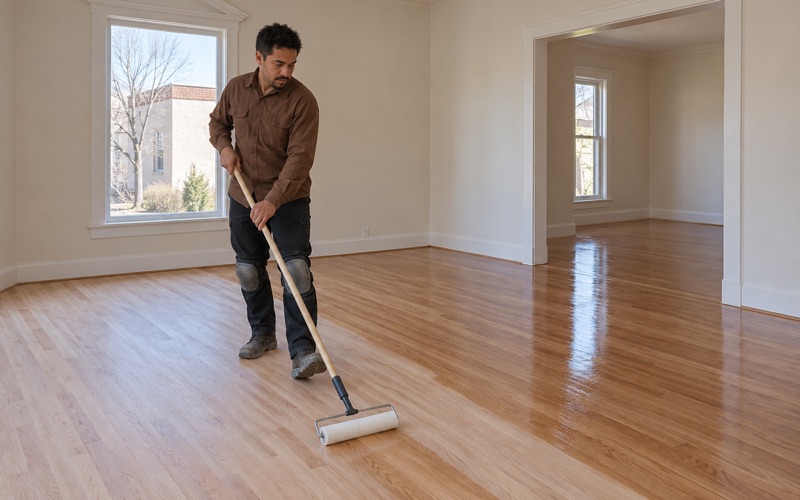
When the wood itself is sound, a screen and recoat can restore protection without sanding to bare wood. If the finish is peeling polyurethane or worn through to raw boards, a full sanding is the better route. We use waterborne polyurethane and low-odor options that meet the federal architectural coatings VOC limits, which matters when people are living in the house during the work.
We do not recommend sanding a floor in the middle of a dry spell if the boards are still shrinking. Sanding flattens the surface at one moisture level, and if the wood keeps moving afterward, the fresh finish can crack along the seams. Getting indoor humidity steady first often means a better result from the same work.
Looking for wood-flooring closer to Los Cerrillos? See Wood-Flooring in Los Cerrillos.
Houses Built from 1980 to 2009
The census place counts 272 housing units, and 65.1 percent of them were built between 1980 and 2009. That shapes what we expect to find under a floor, how the original materials were installed, and which repairs make sense.
What We Find in Floors From This Era
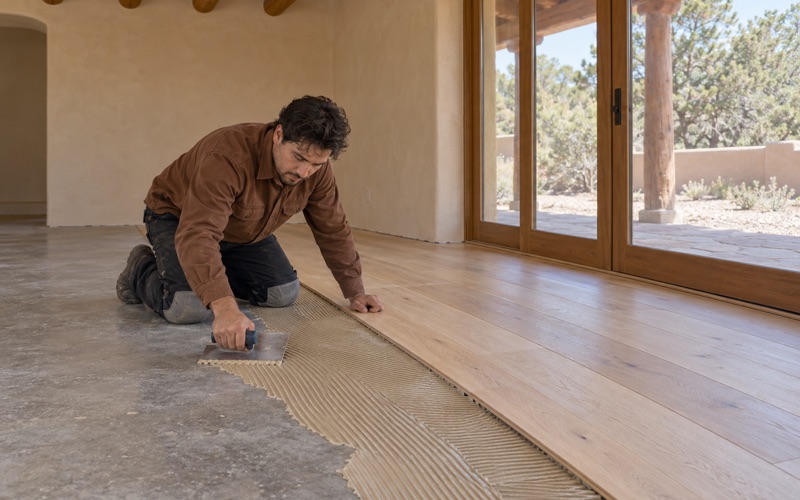
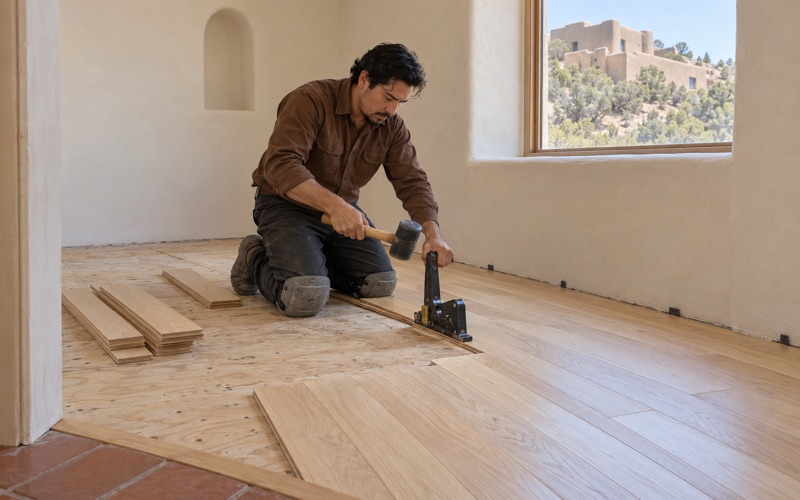
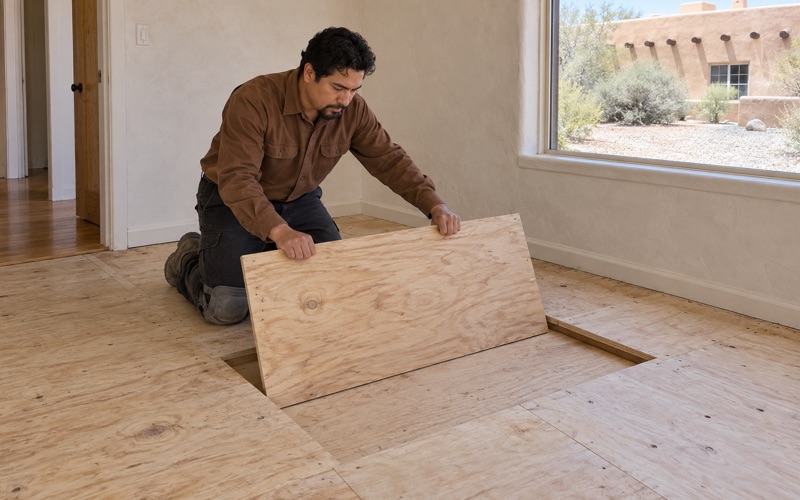
Under a floor from these decades we may find a plywood subfloor or an OSB subfloor over floor joists, or a concrete slab, and the coverings on top vary widely. Some homes have wood that was installed decades ago and has been through many dry seasons; others have carpet or tile that the owner now wants to replace with wood. Because we do not assume a construction type, we check what is actually there before recommending a nail-down, glue-down or floating installation.
For a replacement floor, engineered core construction tends to handle dry air with less movement than solid hardwood, and a thicker wear layer allows future refinishing. Solid white oak, hickory or maple can still work well when the wood is acclimated to the house and humidity is controlled. We check the Janka hardness rating against how the room is used, especially in kitchens and entries.
Ownership and Long-Term Decisions
In the census place, 82.3 percent of occupied homes are owner-occupied. For an owner planning to stay, the choice of species, finish and humidity control is a long-term decision, and spending a little more on moisture testing and acclimation usually pays back in fewer repairs.
Our estimates are written and itemized so you can see what each part of the job costs. If you rent a home out, those estimates are also useful for security deposit itemization under New Mexico’s 30-day rule. Older stock matters too, since 34.9 percent of the census place’s units were built before 1980, and for any home built before 1978 we follow lead-safe work practices before sanding an old finish.
Keeping Indoor Humidity Where Wood Can Live With It
Most wood floor problems in dry climates come down to humidity. The goal is not to make the house damp, but to keep relative humidity within a range the floor can tolerate, and to keep it there steadily rather than letting it swing.
Setting a Written Humidity Target
After we take moisture readings, we give you a written indoor humidity target for the floor we installed or repaired. That target depends on the species, whether the floor is solid or engineered, and the moisture content at installation. A simple hygrometer lets you check it yourself during the driest months.
When the house cannot hold that target on its own, a whole-house humidifier is often the most reliable fix. Room humidifiers can help in a single space, but they rarely cover the whole floor evenly.
Acclimation and Moisture Before Installation
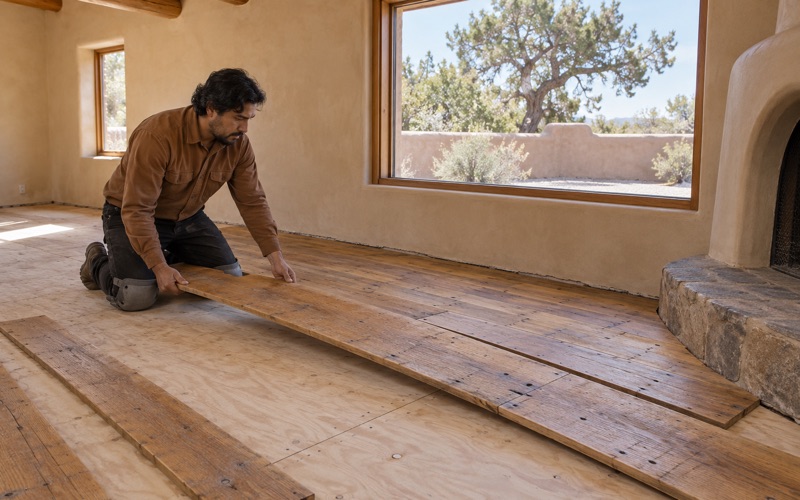
New flooring should reach a moisture content close to what it will live at in the house. Reclaimed and wide plank wood, often milled somewhere wetter, needs particular care or it will open up in the first dry season. We acclimate material inside the house and read it with a wood moisture meter before it goes down.
Concrete slabs get their own testing. We use a calcium chloride moisture test or an in-situ relative humidity test, and install a vapor retarder where the readings and the NWFA installation guidelines call for one.
Wood Over Radiant Heat
Radiant floor heat adds a second drying force directly under the boards. We plan wood over hydronic radiant floor heating to the NWFA radiant guidelines, which cap the floor surface at 80 degrees Fahrenheit and limit temperature changes to 5 degrees a day. Those same guidelines rule out a setback thermostat for a wood floor over radiant heat, so the system should run steadily rather than cycling.
Questions to Settle Before Work on Pueblo Land
Scheduling a job starts with a conversation about the house and the people involved. We ask a few questions up front so the work fits the household and the place, and nothing is assumed.
Who Needs to Be Part of the Decision
The Pueblo de San Ildefonso is a federally recognized tribe and a self-governing community. Before we schedule work, we ask the homeowner who should be consulted about work on the property, and we follow that answer rather than assuming how outside rules apply. If there is any doubt, we wait until it is settled before bringing in crews or material.
Planning the Work Around the Household
We confirm access, parking for our equipment and where the dustless sanding system and materials can be staged. We also go over the cure schedule for the finish, so you know when furniture can go back and when the rooms are ready for regular use. If the job falls in a hot, dry stretch, we plan ventilation and humidity during the cure as well, because a finish that dries too fast can leave lap marks.
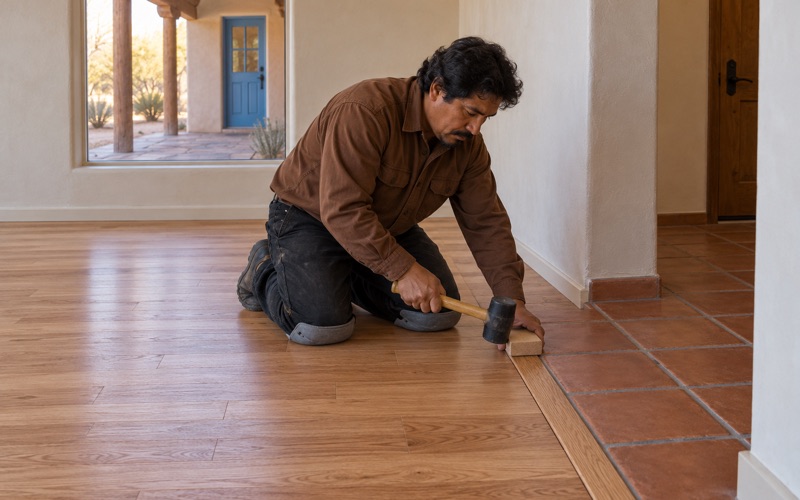
Where wood meets Saltillo tile, brick or flagstone, we plan the transition in advance so there is no lip or gap at the doorway. Old floor furnace openings or wall heater holes can be patched with boards woven into the existing floor, so the repair blends in rather than standing out.
- 20+ Years Experience
- Written Moisture Readings
- Itemized Written Estimates