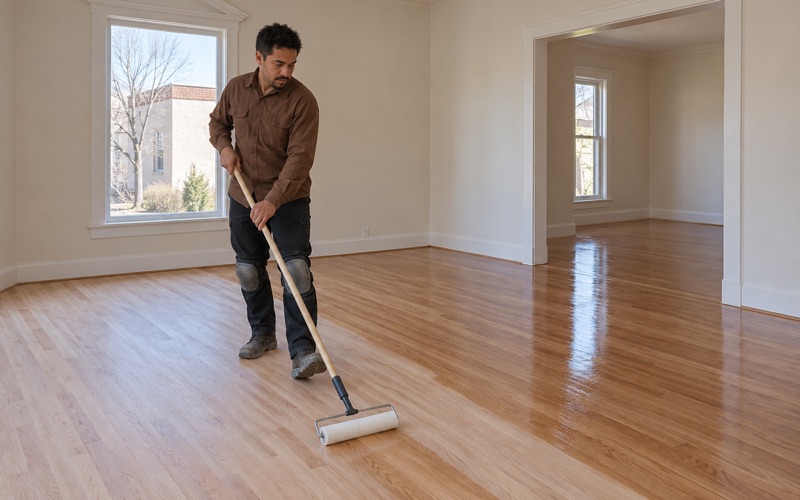
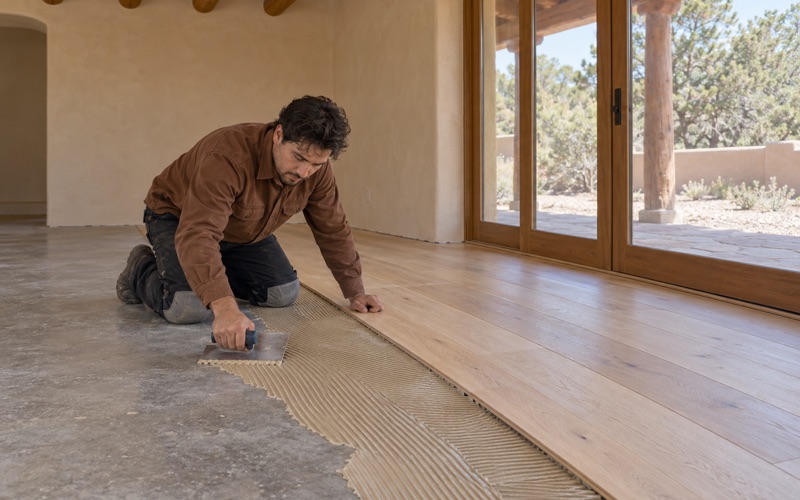
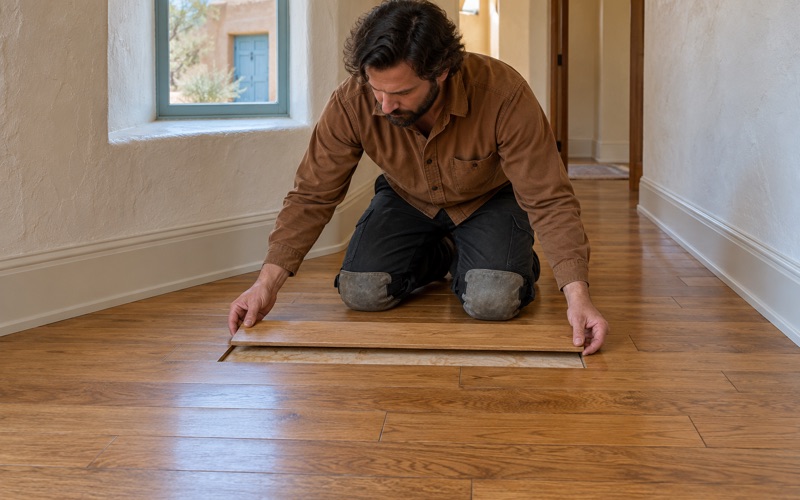
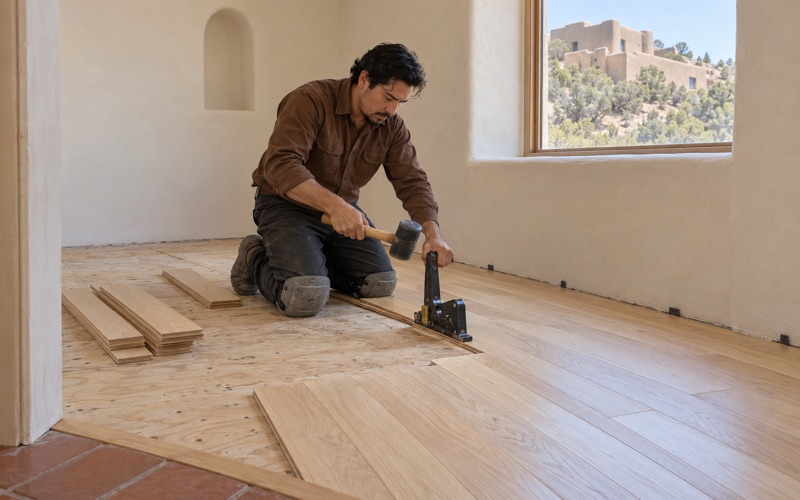
Santa Fe Wood Flooring has spent more than 20 years on wood flooring in La Cienega and the surrounding valley country, installing new floors, refinishing tired ones and repairing boards that have gapped, cupped or worked loose. Most of the calls we take out here come from owners who plan to stay put, so we scope the work to last rather than to turn a room around quickly.
Our approach starts with a meter rather than a sales pitch. Before any flooring is ordered, we take moisture readings in the wood, in the subfloor and in any concrete the new floor will sit over, and we write those numbers down so you can see what the decision rests on. If a floor already shows gaps, checking or squeaks every winter, we treat it as a humidity question first and hand you an indoor humidity target in writing.
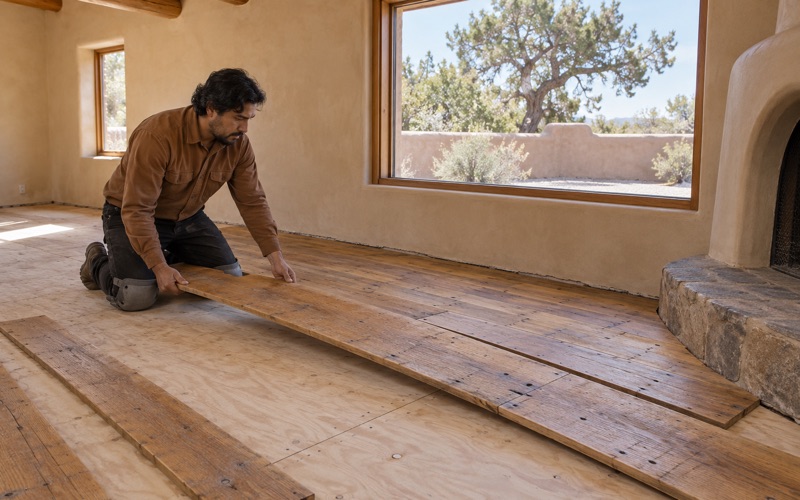
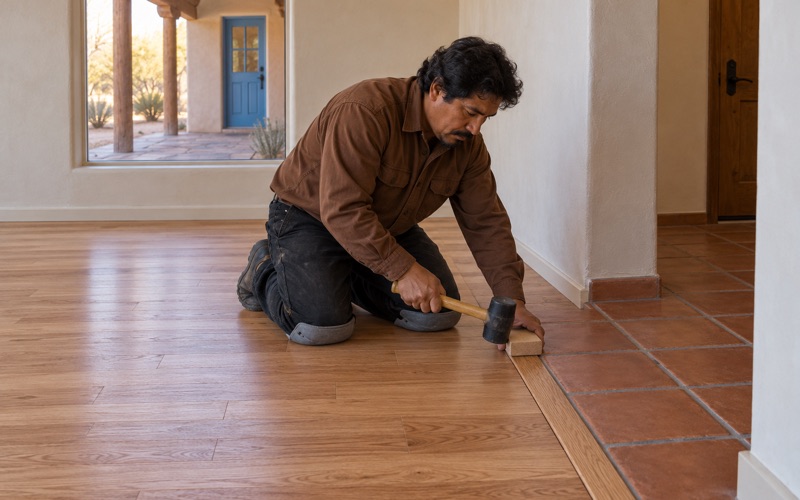
We work with solid hardwood, engineered plank, reclaimed boards and wide plank pine, and we plan the awkward spots where wood has to meet Saltillo tile, brick or flagstone at a doorway. For refinishing, we use finishes that fall within the federal VOC limits for architectural coatings, including low-odor waterborne options for a house people are still living in.
Wood Floors in a Spring-Fed Valley
La Cienega takes its name from the Spanish word for a marsh, and the name is literal. According to the New Mexico Bureau of Geology, the Ancha Formation is the primary aquifer supporting the wetlands here, and where that aquifer thins, groundwater is forced to the surface and discharges as springs and seeps. Those springs, the ojos y ojitos, fed the valley’s ditches for generations, and the County’s 2015 La Cienega and La Cieneguilla Plan Update describes traditional agriculture in the area as sustained by spring-fed acequias.
The Springs Have Been Fading
The same plan records a long decline. By the 1990s, it says, greatly diminished flows from area springs made it necessary to add supplemental groundwater irrigation wells. La Acequia de La Cienega, one of the ditches the plan describes, has run an irrigation well since 1998 because of dramatic declines in the springs that feed it. The plan also notes that the number of groundwater wells in the area has increased, and the Bureau of Geology adds that the groundwater feeding the wetlands is highly susceptible to pumping, drought and land use changes.
Where the Wetland Still Shows
The clearest place to see what the valley once looked like is the Leonora Curtin Wetland Preserve, a cienega of about 35 acres managed by the Santa Fe Botanical Garden. Three acequia associations and four private acequias still serve the valley, and the Santa Fe River, Cienega Creek, Arroyo Hondo, Arroyo Chamiso and Alamo Creek all cross the plan area.
What That Means for a Floor
Customers ask about this, and the honest answer matters. Living in a valley named for its springs tells us nothing about the moisture in your particular floor, and we do not assume it does. What it does mean is that nobody should guess. The only reliable way to know what a subfloor or a concrete floor is holding is to measure it, which is what we do on every job regardless of the address.
Looking for wood-flooring closer to Eldorado at Santa Fe? See Eldorado at Santa Fe Wood-Flooring.
Houses Built From the 1970s On
Census figures describe a housing stock that is younger than many people expect in an old farming valley. Of La Cienega’s 1,359 housing units, 60.7 percent were built between 1980 and 2009, another 408 went up during the 1970s, and only six predate 1960. Four out of five occupied homes, 79.8 percent, are owner-occupied, which fits what we see: households investing in a floor they intend to live on for decades.
Subfloors We Expect to Find
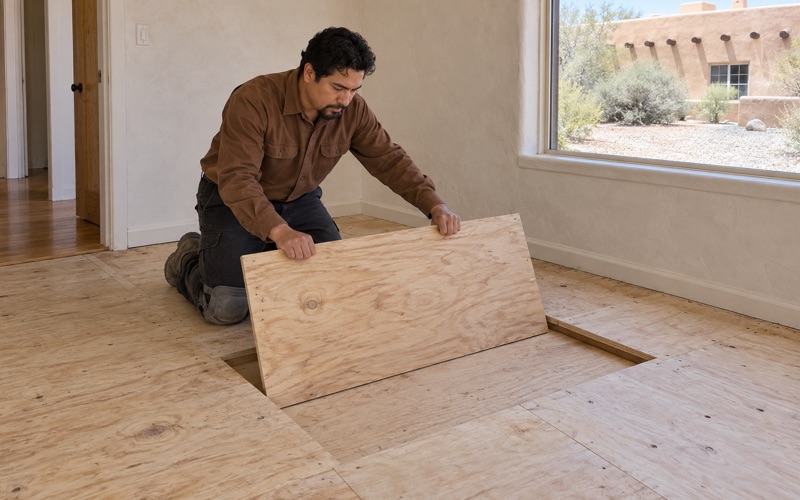
Houses from this period vary widely in what sits under the finished floor. We find plywood subfloor, OSB subfloor, concrete, and in some rooms two or three earlier floors stacked on top of each other. We never assume which one a room has, so before quoting we lift a floor register or check a closet edge to confirm what the new floor will be fastened or glued to, because that decides between a nail-down installation, a glue-down installation and a floating installation. Winter squeaks in an existing floor often trace to subfloor fasteners that have loosened over the years, so we re-fasten the subfloor to the floor joists before new flooring covers the problem.
Houses Built Before 1978
The early and mid-1970s houses in the valley predate 1978, the line the EPA Renovation, Repair and Painting rule draws. When an old finish or painted trim in one of those homes is going to be sanded, we set up lead-safe work practices first, with containment and cleanup that keep dust out of the rest of the house.
Radiant Heat and Old Heater Openings
Some homes carry hydronic radiant floor heating, and wood over in-slab radiant tubing needs a plan before a single board is chosen. We follow the NWFA radiant heat guidelines, which cap the floor surface at 80 degrees Fahrenheit and limit temperature changes to 5 degrees a day, and because those guidelines rule out a setback thermostat, we talk through the heat settings with you. On any radiant job we also run the system and record the surface temperature before installation. Where a house has an abandoned floor furnace opening or a wall heater hole, we weave matching boards into the surrounding floor so the repair does not read as a patch.
Testing Moisture Before New Floors Go Down
This is the part of the job that most shapes the result, and it is where we spend the time a rushed installer skips. Three materials get measured, and each one can stop a job until the numbers make sense.
Readings in the Wood
Every delivery of flooring is checked with a wood moisture meter when it arrives and again after acclimation. Boards milled somewhere wetter than northern New Mexico, which includes a lot of reclaimed and wide plank stock, need time inside the house to settle toward the equilibrium moisture content they will hold here. Installing them early is how a floor opens up in its first winter with board gaps you can slide a coin into.
Readings in the Subfloor
Over a wood subfloor, we compare its moisture content with the flooring’s and hold the difference to what the NWFA installation guidelines allow. A subfloor reading that is out of line with the rest of the house is worth tracing before anything goes down, because it can point to a plumbing leak, an old spill or a roof problem that a new floor would only hide.
Readings in Concrete
Where wood goes over concrete, we test the concrete itself, at more than one spot, since a single corner of a room tells you little about the middle. Depending on the product and the manufacturer’s requirements, that means a calcium chloride moisture test or an in-situ relative humidity test with probes set into the concrete. The result decides whether a vapor retarder is required, which adhesive system is appropriate, and whether an engineered product with the right wear layer thickness is a better choice than solid hardwood for that room.
Why We Write It Down
Every reading goes on paper with the date and the spot it was taken. If a floor ever cups, crowns or buckles, you and anyone you call in later can see the conditions it went down in. It also keeps us honest: if a reading says wait, we wait, and we tell you why. The readings set the schedule too, since a realistic acclimation window goes on the estimate and you know when material arrives, when it goes down and when furniture can come back.
Floor Care in a Rural Setting
Valley living is hard on floors in its own way. Long dirt and gravel driveways, outdoor work, dogs coming in from open ground and grit from dry yards wear a finish down faster than a paved city lot does.
Choosing Species and Finish
For busy entries and kitchens, harder species such as white oak, hickory or maple hold up better than softer pine, and the Janka hardness rating gives a fair comparison. Wide plank pine and reclaimed wood still suit the Santa Fe Style look many owners want, as long as everyone accepts that a softer board will wear dents as character. We finish with waterborne polyurethane, oil-modified polyurethane or a hardwax oil finish depending on how the room is used and how easy future touch-ups need to be.
Keeping Grit Off the Finish
Most finish wear is abrasion. Good mats at every exterior door, felt pads under furniture and regular dry dust mopping do more for a floor than any cleaning product. When a finish is dull but not worn through to bare wood, a screen and recoat restores it for far less than a full sanding. Sun fading is the other slow change we see near large windows, and rugs that never move leave an outline behind; shifting them a few times a year keeps the color even.
Dry Air, Leaks and Repairs
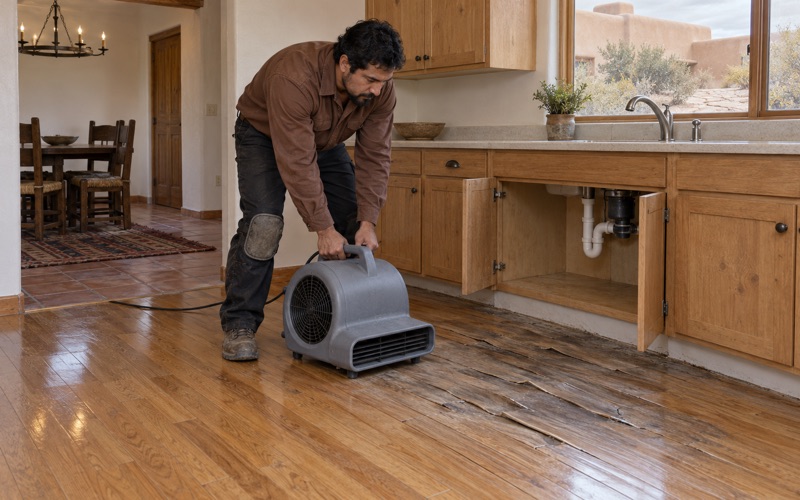
Dry winter air is the most common reason a floor gaps or squeaks in this part of New Mexico, so we measure relative humidity inside the house and give you a target to hold, whether with a whole-house humidifier or simpler habits. When water damage does happen, including a leak in a radiant heat line, we trace it to its source and document it with photos and moisture readings an adjuster can use. Damaged boards come out and matching ones are woven in, so a repair blends with the floor around it. Pet urine stains that have turned dark in the wood usually call for board replacement rather than sanding, because the discoloration runs deeper than the finish.
Every job starts the same way: a visit, a set of readings and a written, itemized estimate you can hold us to. Nothing is ordered until those readings say the house is ready for it.
- 20+ Years Experience
- Written Moisture Readings
- Itemized Written Estimates