Santa Fe Wood Flooring has spent more than 20 years on wood flooring in Española and the rest of northern New Mexico, and a large share of the floors we see here belong to rentals. For a landlord, a floor is a line item between tenants that has to be scoped, priced and finished on a date. We plan refinishing, board repair and replacement around that schedule.
Our first visit measures before it recommends. We take moisture readings in the boards, the subfloor and any concrete, write them down, and then explain what the floor needs now and what can wait for the next vacancy. Every estimate is itemized in writing, so an owner can file it with the unit’s records and compare it with the finished job.
This page covers how we handle turnover work, how the approach changes between detached houses, mobile homes and small apartment buildings, and what an older Española house asks of a crew. It closes with the order the City sets out for zoning and building permits.
Floor Work in Española Rental Homes
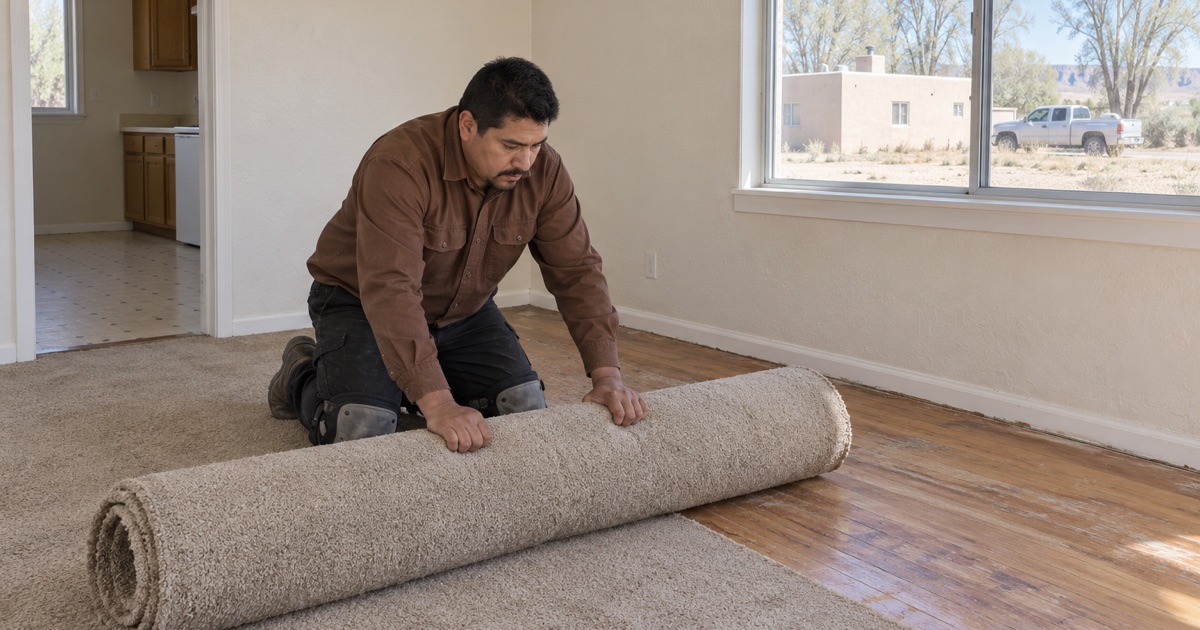
Renting is a large part of how Española lives. Census estimates count 1,438 renter-occupied homes out of 4,132 occupied units, or 34.8 percent, and the same survey found 92 units vacant and listed for rent. Those empty weeks are when floor work fits best.
What Landlords Ask Us First
Most rental calls start with the same three questions: can the floor be saved, how long will the unit be down, and what will it cost. We answer the first by reading the wear layer, the board condition and the moisture, since a floor with enough wood left and dry readings can usually be sanded rather than replaced. The second and third depend on the finish system and the size of the job, and we put both in writing before anything starts.
We also sort problems into ones that affect use and ones that are cosmetic. A lifted board or a soft spot near a bathroom is a trip hazard and often a sign of water, while sun fading or light scratches can often ride until a longer vacancy.
Timing matters as much as scope. When a tenant gives notice, we can walk the unit before move-out, write the scope and have materials on hand, so floor work starts the day the keys come back. That turns a vacancy into a few days of floor work rather than weeks of waiting on a quote.
Public Housing and Voucher Units
Two public housing authorities operate in the city. The Española Housing Authority on Calle de Pajarito runs public housing apartments and Section 8 Housing Choice Vouchers, and the Rio Arriba County Housing Authority on La Joya Street runs public housing at two locations and its own voucher program. Private owners who rent to voucher holders often want floor work documented, and our written scopes and dated photos give them that record.
Looking for wood-flooring closer to Ohkay Owingeh? See Wood-Flooring in Ohkay Owingeh.
Turnover Refinishing Between Tenants
Between tenants the goal is a floor that looks cared for and holds up to the next lease, finished on a known day. We choose the method by how much wood is left and how worn the finish is, not by habit.
Screen and Recoat or Full Sanding
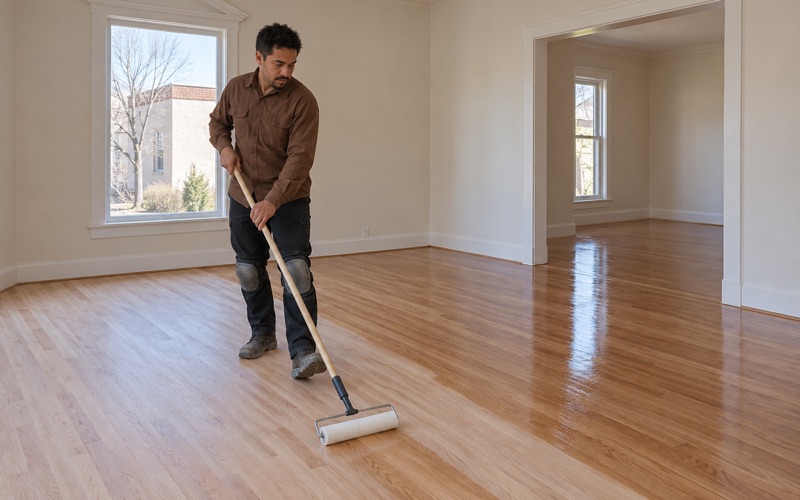
When the finish is dull and scratched but has not worn through, a screen and recoat often does the job. We abrade the existing finish, clean it, and apply fresh coats, which renews the surface without removing wood and keeps the unit offline for a shorter stretch. It only works when the old finish is sound and free of wax or residue that would stop a new coat from bonding.
Worn traffic lanes, gray patches where finish has gone, pet urine stains and peeling polyurethane call for a full sanding. We work through a grit sequence with a drum sander, an edger and an orbital sander, then apply the finish from bare wood. A dustless sanding system keeps most of the debris out of the rest of the unit, which matters when a neighbor shares a wall.
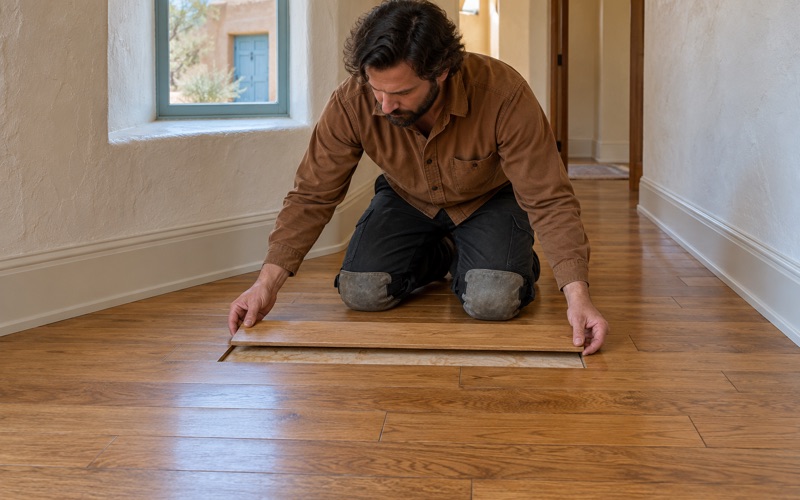
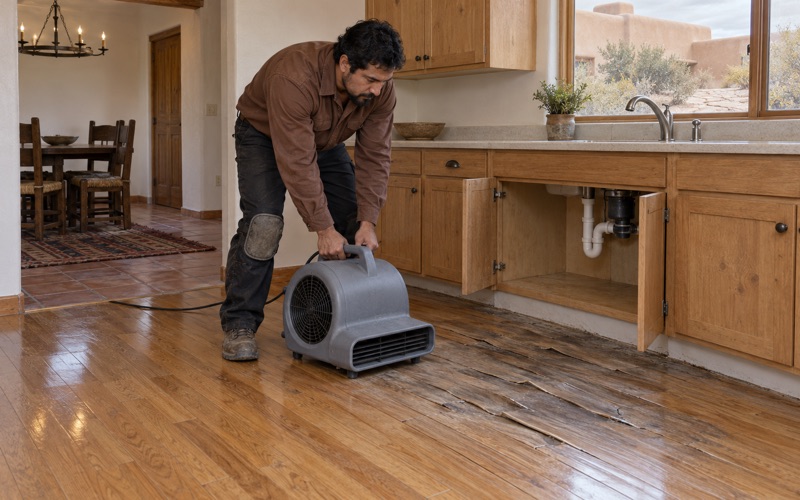
Board replacement usually comes before either method. Deep gouges, split boards and stains that have soaked into the wood are cut out and replaced with matching stock first, so the new boards take the same finish as the old ones. When a floor near a kitchen or bathroom is cupped or darkened, we trace the leak to its source and document it with photos and moisture readings an adjuster can use, then dry the floor before any repair.
Finishes, Odor and a Written Cure Schedule
We use finishes that meet the federal architectural coatings VOC limits, and for units where people will move in soon we lean toward low-odor waterborne polyurethane. Oil-modified polyurethane and hardwax oil finishes each have a place, but they cure on different timelines and bring more odor. We talk through sheen level too, since a satin finish hides the scuffs of a new tenant’s move-in better than a gloss.
Every turnover job gets a written cure schedule showing when the floor can take light foot traffic, when furniture can return and when rugs can go down. That date is what lets a property manager book a walkthrough, a cleaner and a move-in without guessing. The same schedule applies when a short-term rental is booked back to back.
Itemized Estimates That Hold Up Later
Our estimates list each area and each task separately, such as board replacement in one room and a recoat in another. An owner can see what a tenant-caused repair cost apart from routine upkeep. We keep the readings and photos so a later visit can be compared with this one.
Detached Rentals, Mobile Homes and Small Apartment Buildings
Española’s renters live in several kinds of buildings, and the floor plan for each is different. The census estimates put 457 renter households in detached houses, 421 in mobile homes and 158 in buildings of five to nine units, with the rest spread across attached homes, duplexes and larger buildings.
Detached Rentals
A detached rental usually has the most flexibility. We can stage equipment outside, run a dustless system without worrying about a shared hallway, and handle the whole house in one visit. These homes also tend to collect patchwork over time, with one room carpeted, one refinished and one with replacement boards that never matched, so we look at the whole floor before quoting a single room.
Where an older detached house still has an opening from a removed floor furnace or wall heater, we patch it by weaving boards into the existing floor rather than dropping a square plug in the middle of a room. Staggered joints make the repair read as part of the floor.
Mobile Home Rentals
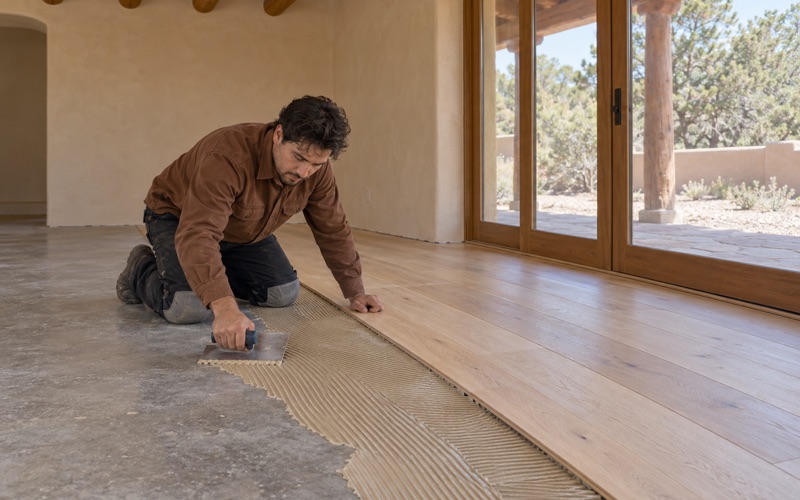
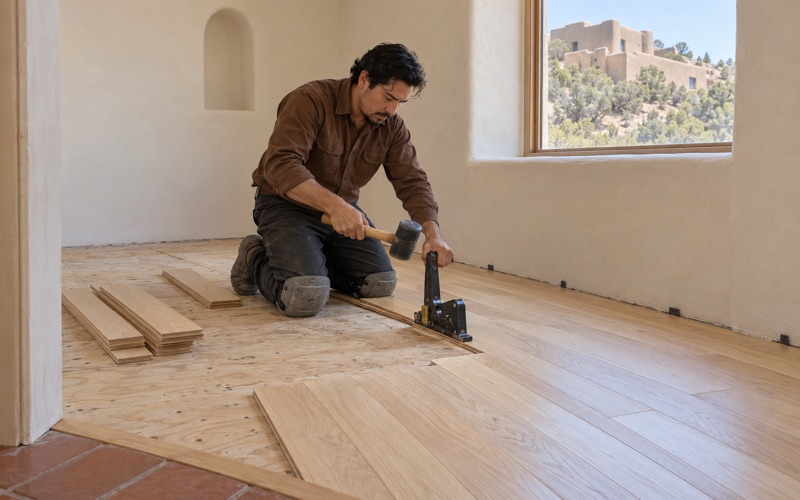
In a mobile home we check the floor structure before recommending anything. The decking, its fastening and the weight it can carry decide whether solid hardwood, an engineered floor or a floating installation makes sense. We will not put a heavy nail-down floor over a structure that was not built for it.
Small Apartment Buildings
In a building of five to nine units, work has to fit around neighbors. We plan sanding for daytime hours, contain dust at the unit door and keep noise in a known window. Where one floor sits over another unit, we talk through underlayment choices with the owner before installation rather than after a complaint.
A building owner often turns several units in a year. We can hold the same species, stain and sheen from one turnover to the next so the units stay consistent, and we keep a record of what went into each one.
Older Española Homes and the City Permit Path
Española was incorporated in 1925, and the city sits mostly in Rio Arriba County, with part of its central and eastern section in Santa Fe County. Much of the city’s housing went up decades after incorporation but decades before today, and that age shapes how we approach the finish and the subfloor.
Homes Built in the 1970s and Before
Census estimates count 4,823 housing units in the city, and 53.7 percent were built before 1980. The 1970s is the single largest decade in the count, with 1,028 units. Houses from those decades may have been refinished several times, so we check how much wood remains above the tongue before we promise another full sanding.
For any house built before 1978, we follow lead-safe work practices before sanding old finish. An old coating can contain lead, and sanding it releases dust that settles in a unit a family will move into next. Containment, cleanup and verification come before the first pass of the drum sander.
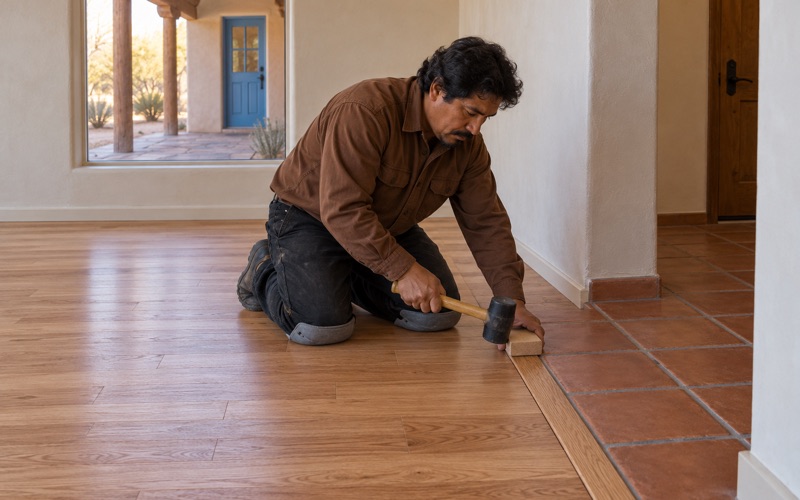
Older homes also meet newer materials at the doorways. Where wood meets Saltillo tile, brick or flagstone, we plan the transition with a reducer strip or T-molding so the change in height does not leave a lip a tenant will catch a toe on.
Radiant Heat and Dry Winters
Where a house heats through hydronic radiant floor heating, the floor plan changes. For wood over radiant heat we follow the NWFA radiant heat guidelines, which cap the floor surface at 80 degrees Fahrenheit and limit temperature changes to 5 degrees a day. Those guidelines rule out a setback thermostat, so we tell owners the system has to run steadily and explain why before the floor goes down.
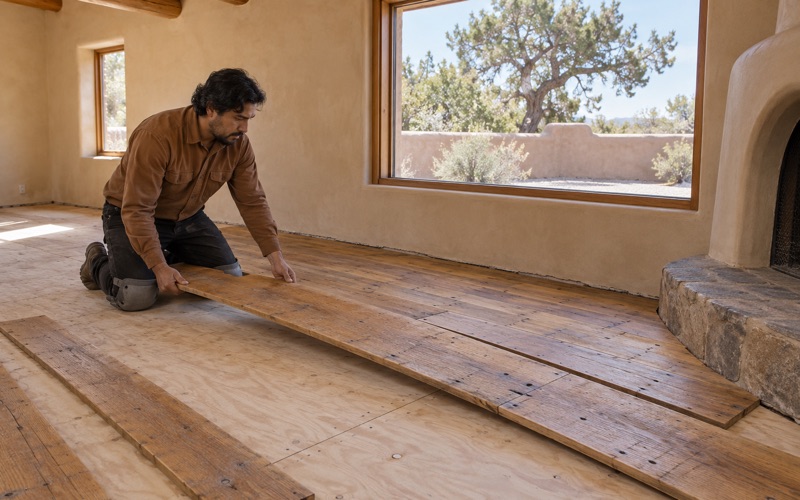
Dry northern New Mexico air opens board gaps and brings winter squeaks. We treat those as a humidity question first and give owners a written indoor humidity target, and new boards acclimate in the house before installation. Reclaimed or wide plank wood milled somewhere wetter gets extra time, since boards laid too soon can shrink and open up in the first winter.
City Zoning First, State Permits Second
The City of Española lays out a two-step path for building permits. Its FAQ says building permits need zoning approval from the Planning and Land Use Department first, and once that is granted, the building permit comes from the New Mexico Construction Industries Division. The department is at 409 N. Paseo de Oñate and takes applications in person with a site plan, proof of ownership or lease and a detailed project description.
Properties in a floodplain need a Certificate of Elevation for a City site permit. When floor work is part of a larger renovation, we point owners to the City’s own office so the zoning question is answered by the people who decide it.
- 20+ Years Experience
- Written Moisture Readings
- Itemized Written Estimates