Santa Fe Wood Flooring offers wood flooring in Cochiti for homeowners who want a clear answer before anyone sands a board, and we bring more than 20 years in the trade to each job. We repair damaged boards, refinish worn floors and install new ones, and every job starts with a moisture reading rather than a guess. The readings for the wood and the subfloor are written down, so you can see what we measured before any material is ordered.
Most of what we see on older floors comes down to dry air. Gaps between boards, checking and winter squeaks are treated as a humidity question first, and we leave you with a written indoor relative humidity target instead of a vague suggestion to run a humidifier. That target is what keeps a repair from opening up again the following winter.
Because the decision to fix, refinish or replace belongs to the person who owns the house, we give you an itemized estimate and the reasoning behind it. You choose the scope, and we explain what each option does to the floor you already have.
Floor Work in an Owner-Occupied Community
The Cochiti census-designated place sits in Sandoval County, and its housing tenure shapes how floor work gets decided. The American Community Survey 2024 five-year estimates count 236 occupied homes there, all of them owner-occupied, with the renter estimate at zero and a margin of plus or minus 14. In practice, the people calling us about a floor here are nearly always the people who own it.
What Owner Decisions Change
When there is no landlord in the picture, nobody is weighing a deposit deduction or rushing a unit back onto the market. The questions are longer-term ones: how many more sandings a floor can take, whether a damaged room is worth patching or replacing, and what finish the household can live with during the work. We answer those in writing so the choice can be made at the kitchen table rather than on the spot. That also means the same owner lives with the result, so we explain how each finish will wear rather than just how it looks on day one.
Living in the House During the Work
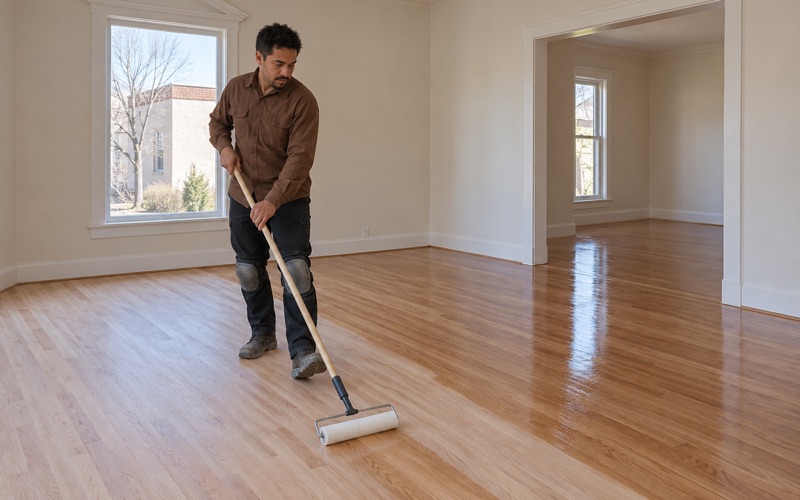
Owner-occupants often stay in the house while we work, so finish choice matters. We select finishes that meet the federal architectural coatings VOC limits in 40 CFR 59 Subpart D, and we offer low-odor waterborne polyurethane for rooms the family needs back quickly. A dustless sanding system cuts down the fine dust that reaches the rest of the house, and we sequence the rooms so a kitchen or a bedroom is never out of use longer than it has to be. We give you a written cure schedule, so you know which day furniture can go back and when rugs can return.
Estimates You Can Plan Around
Owners paying for their own floors may prefer to spread the work over time, so our estimates are itemized by room and by task. You can see what the sanding costs apart from the finish, what a board replacement adds, and what the moisture testing covers. That makes it straightforward to do the worst room this year and the rest later with a clear idea of what each stage will cost.
Looking for wood-flooring closer to Santa Clara Pueblo? See Wood-Flooring in Santa Clara Pueblo.
Houses from the 1970s and Their Floors
The same survey counts 264 housing units in the Cochiti census place, and 169 of them were built between 1970 and 1979. The margins on those figures are wide, but the pattern is clear enough to plan around: roughly two-thirds of the housing dates from one decade, and 75.0 percent of units were built before 1980. The survey also classes 84.5 percent of units as one-unit detached houses.
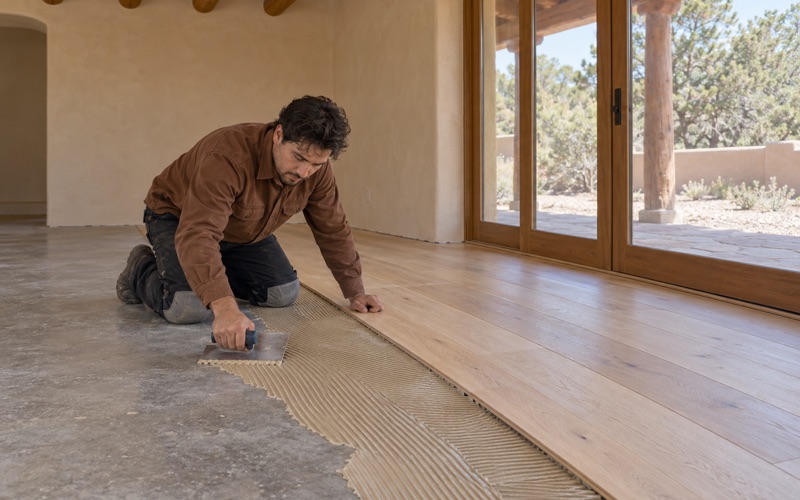
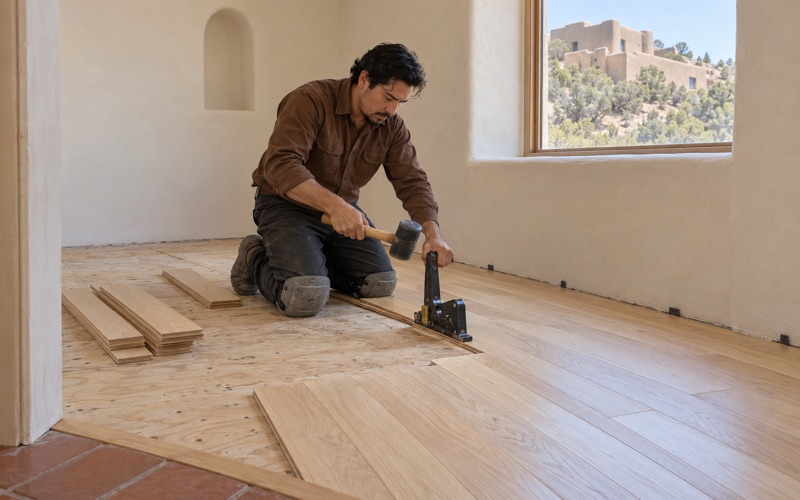
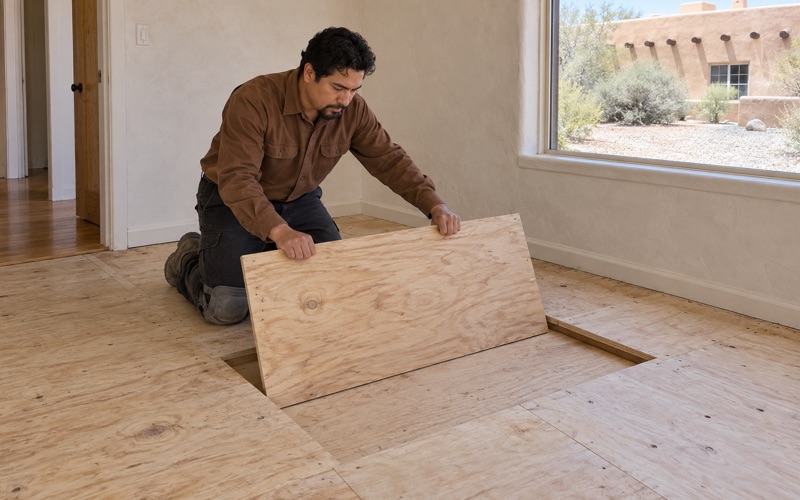
Among owner-occupied housing, it also counts 14 attached units and 23 mobile homes. A mobile home floor can sit over a lighter subfloor system than a detached house, so we check the deck for flex and fastener hold before choosing between a nail-down, glue-down or floating installation.
Floors at Fifty Years
A house finished in the 1970s is now around fifty years old, and any original floor in it has had half a century of foot traffic, furniture and sun. Where a room has wood flooring from that era, the first thing we check is how much wood is left above the tongue, because that decides whether a full sanding is still on the table. A solid hardwood floor that has been sanded several times may only have room for a screen and recoat.
Choosing a Finish for an Older Room
Oil-modified polyurethane applied decades ago tends to amber, which produces the orange oak look that often prompts a refinish. Sanding to bare wood and switching to a clear waterborne polyurethane or a hardwax oil finish changes the tone considerably, and we test a small area first so you see the color before the whole room is committed. Red oak and white oak take stain very differently, and maple can go blotchy under a dark stain, so we confirm the species on site before recommending a color.
Lead-Safe Work on Pre-1978 Finishes
Housing from the 1970s straddles the 1978 line that the EPA Renovation, Repair and Painting rule uses for pre-1978 housing. On a house built before 1978, we follow lead-safe work practices before any old finish is sanded, because a finish or a painted edge from that period can carry lead. That work is planned into the estimate so it is not a surprise halfway through the job. If you know the year your house was finished, tell us when you call; if not, we treat it as pre-1978 until we know otherwise.
Repair or Refinish: Choices for an Older Floor
An older floor rarely needs everything at once. We sort the problems into what a humidity change will fix, what a board replacement will fix, and what only a full sand and refinish will fix, and we price them separately so you can decide the order.
Gaps, Cupping and Squeaks
Board gaps that open every winter and close every summer usually follow the house’s indoor humidity, not a failed installation. We take moisture content readings with a wood moisture meter, compare them to the equilibrium moisture content the room should hold, and write down the humidity range that keeps the boards stable. Cupping or crowning points the other way, toward a moisture source, and we look for it before touching the surface. Winter squeaks can quiet down once the humidity is corrected, which is cheaper than refastening the floor.
Screen and Recoat or Full Sanding
A screen and recoat abrades the existing finish and adds a fresh coat without cutting into the wood, which suits a floor that is dull but not worn through. A full sanding runs a drum sander and an edger through a grit sequence down to bare wood, and it is the usual route past deep scratches, gray water stains or peeling polyurethane. Each full sanding removes wood a floor cannot get back, so on a fifty-year-old floor we would rather recoat when a recoat will do.
Old Heater Openings and Damaged Boards
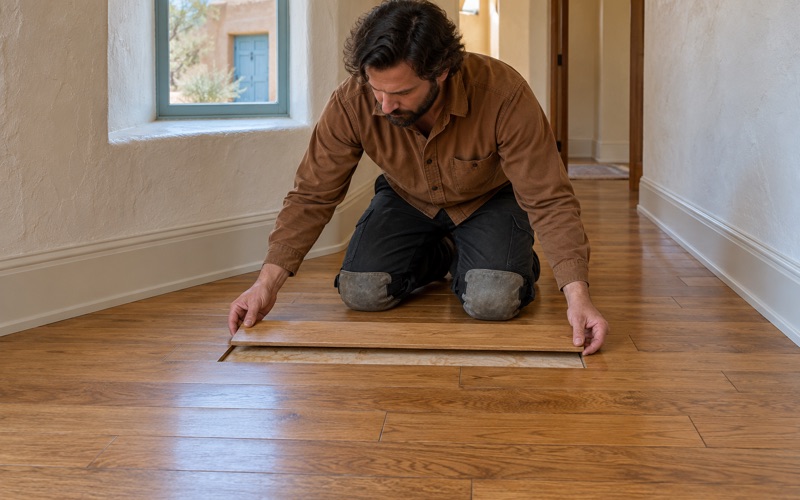
Houses of this age sometimes carry the marks of an earlier heating setup, such as a floor furnace opening or a wall heater that was later removed. We patch those with boards woven into the existing floor, staggered to match the surrounding joints, so the repair reads as part of the room. The same weave-in repair can handle pet urine stains, water-darkened boards and deep gouges, often without sanding the whole floor. We match species, width and grain as closely as the available wood allows, then blend the finish across the repair.
When Water Is the Cause
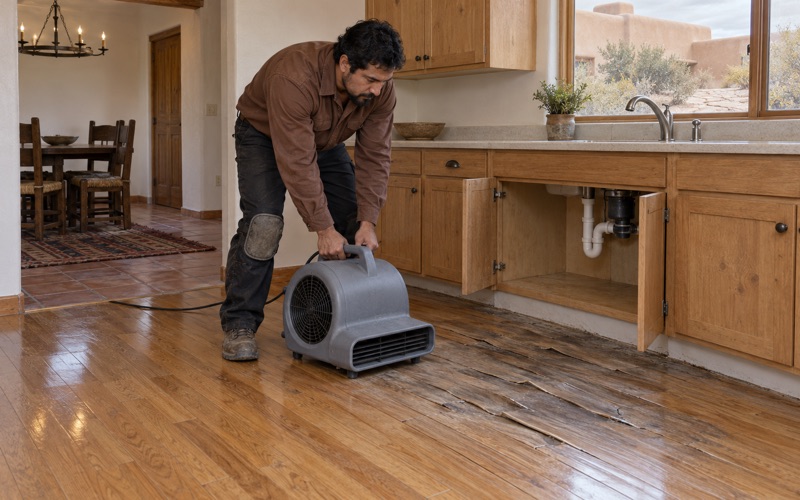
If a floor has buckled or stained from a leak, we trace the water to its source before replacing any boards, since new wood laid over an active leak fails the same way. Once the source is fixed, we let the subfloor dry to a measured reading before new boards go in. Photos and moisture readings go into a record you can hand to an insurance adjuster if you file a claim.
New Floors in Older Rooms
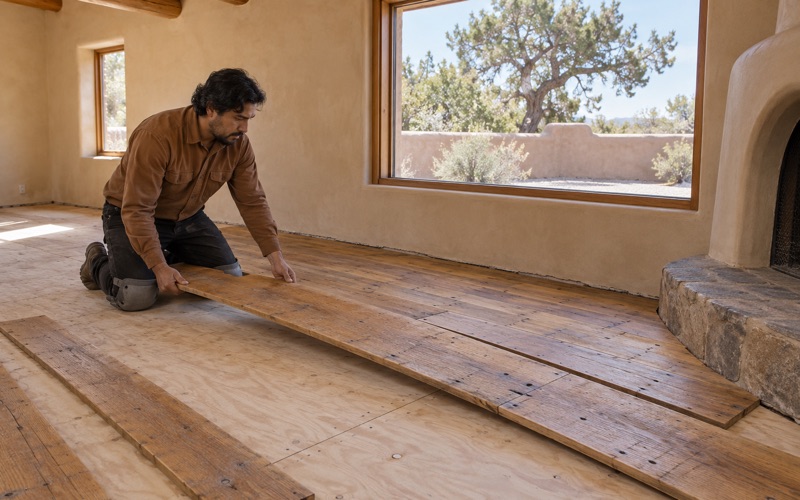
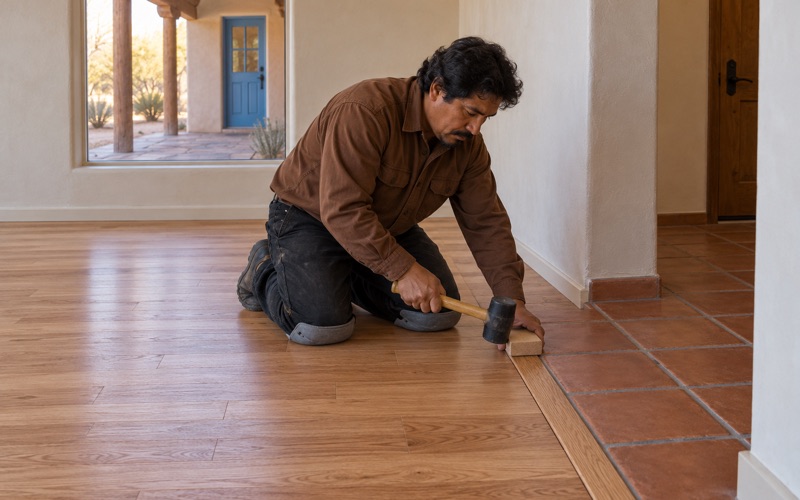
Where a floor is past saving, we plan the replacement around the room it is going into. Reclaimed and wide plank wood is acclimated inside the house before it goes down, because boards milled somewhere wetter can open up in the first dry winter. Where new wood flooring meets Saltillo tile, brick or flagstone at a doorway, we plan the transition so there is no lip or gap to catch a toe.
Housing Programs and Working Respectfully in Cochiti
The Pueblo de Cochiti is a federally recognized tribe, and the Pueblo administers 53,779 acres of reservation land. Its housing authority, the Pueblo de Cochiti Housing Authority on Peralta Street, was established by Cochiti Tribal Council Ordinance 1996-02 to remedy unsafe and unsuitable housing conditions and provide employment through the construction, improvement and repair of low-income dwellings. It is also the local body a homeowner can ask about housing help, which is where the two programs below come in.
Rehabilitation and Elderly Home Maintenance
The housing authority lists rehabilitation projects and an Elderly Home Maintenance Program among its services. We do not speak for either program, and we cannot tell you what they cover or who qualifies; those answers come from the housing authority itself. If you are already working with one of its programs, let us know, and we will give you an itemized written estimate for the floor portion that you can share with them. For an older household member, we can also plan the work so the rooms they use most come back first.
Before We Arrive
The Pueblo has its own government, led by a Governor and a Lieutenant Governor, so we ask the homeowner about access and scheduling before setting a start date rather than assuming. We keep the crew, vehicles and equipment to what the job needs and leave the work area clean at the end of each day. For planning, Cochiti falls in the National Weather Service Santa Fe Metro Area forecast zone, NMZ218, which is the forecast we watch when a finish needs a mild, steady cure window.
When you call, it helps to know which rooms are affected, whether there has been a leak, and what you would like the floor to look like when it is done. From there we set up a visit, take readings and leave you with a written plan you can weigh at your own pace. Even if you decide against any work, you keep the readings and the humidity target.
- 20+ Years Experience
- Written Moisture Readings
- Itemized Written Estimates