Santa Fe Wood Flooring brings more than 20 years of work to wood flooring in Chimayo, and much of what we plan here is for owners who intend to stay in the houses they are fixing up. We install, repair and handle refinishing on solid and engineered floors, and we measure before we recommend anything. On a typical first visit the moisture meter comes out before the sample boards do.
That habit earns its keep in houses that have been added to over the decades. A room built in the 1950s can sit beside an addition from the 1990s, and the two floors rarely behave alike once the winter air turns dry. We write down what we find room by room, so the plan fits the house you actually own rather than a catalog picture of one.
This page covers the oldest buildings in the community, the preservation planning residents have already done, and the practical steps of a floor project in a detached house. It stays on floors and on the decisions an owner actually has to make.
Plaza del Cerro and Chimayo’s Oldest Houses
Chimayo is an unincorporated census-designated place that spans Santa Fe and Rio Arriba counties, made up of neighborhoods called plazas or placitas. The best known of them for its buildings is the Plaza del Cerro, which was placed on the National Register of Historic Places in 1972. Published descriptions note that the plaza is enclosed by contiguous adobe buildings and that its entrances were only wide enough to admit people on foot and animals.
A Plaza Built to Face Inward
The plaza’s houses were built facing the square, with no openings toward the outside. That layout was defensive, and it is why the Plaza del Cerro is described as a fortified colonial plaza rather than a loose cluster of homes. For anyone thinking about floors, it is a reminder that these rooms were designed around thick adobe walls and packed earth, not around milled boards.
Earthen Floors at Casita de Martina
One plaza house, the Casita de Martina, went through a documented restoration that began in the summer of 2017. Cornerstones Community Partnerships worked with the Chimayo Cultural Preservation Association and the Historic Santa Fe Foundation, and youth interns learned adobe skills under the direction of an expert adobero. By the end of 2018 the house was stabilized, plastered with mud inside and out, and fitted with a new roof and repaired roof drainage, and later that year the crew completed its earthen floors.
We read that as the right choice for that building. An earthen floor belongs to a restored adobe house in a way a wood floor does not, and we would not suggest laying boards over one in a historic plaza house. Our work here is with the detached houses around and between the plazas, where wood is a practical, long-lived choice.
Looking for wood-flooring closer to Los Alamos? See Wood-Flooring in Los Alamos.
What the 2013 Preservation Plan Asks For
In August 2013 the Chimayó Cultural Preservation Association completed the community’s first preservation plan, prepared by Valdez & Associates with funding from the New Mexico State Historic Preservation Office. Santa Fe County and Chimayó Citizens for Community Planning carried out the planning process. Residents described Chimayo’s historic character as a series of communities separated by agricultural lands, and they saw that character as seriously threatened by future residential and commercial growth.
Proposals, Not Rules in Force
Among the plan’s recommended actions were establishing a historic overlay district, setting up a revolving loan fund for homeowners wanting to upgrade historic properties, and completing National Register work for several individual properties and historic districts. These are recommendations in a planning document, and we do not treat them as regulations already in effect. If a proposal might touch your property, Santa Fe County is the place to ask about its current status.
What It Suggests for a Floor Project
A plan that talks about upgrading historic properties leans toward repair over replacement wherever a floor is worth keeping. That fits how we already work: we check whether a worn floor can be sanded and refinished, or mended with boards woven into the existing field, before we price new material. When an owner is weighing any kind of outside funding, a written, itemized estimate gives them something concrete to work from.
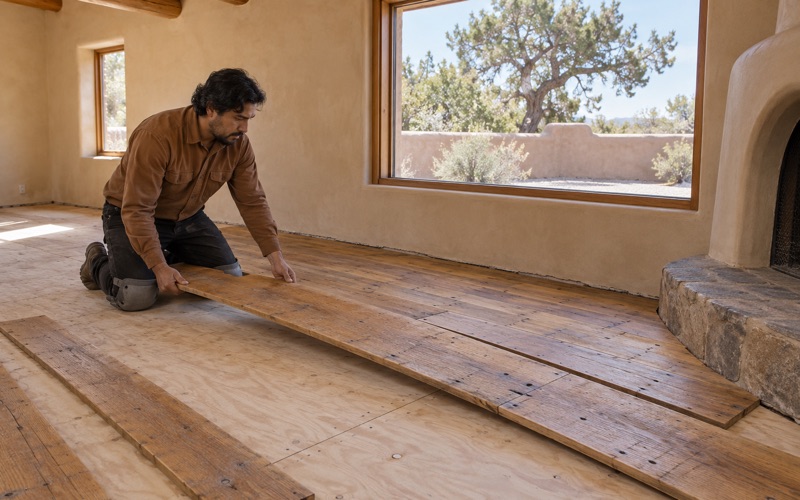
We also keep the character of an older room in mind when we talk about species and sheen. A wide plank pine or a lower sheen level often suits a Territorial or Pueblo Revival interior better than a glossy strip floor, and we say so. The choice stays with the owner, but it should be an informed one.
Older Detached Houses and Their Floors
Census estimates count about 1,220 housing units in Chimayo, all of them either one-unit detached houses or mobile homes. About 13.5 percent of those units were built in 1939 or earlier, and about 52.6 percent predate 1980. Of the 966 occupied homes, 752 are owner-occupied, or about 77.8 percent, and most of those owners live in detached houses.
Those numbers describe the customers we tend to meet here: owners of houses with decades of history, weighing a repair against a replacement. An owner who expects to stay makes a different floor decision than a seller or a landlord does, and we plan accordingly. Durability, repairability and how the floor will look in ten years count for more than how fast it goes down.
Lead-Safe Work on Old Finishes
With more than half the housing built before 1980, many wood floors here carry coatings old enough to raise the lead question. On houses built before 1978 we use lead-safe work practices before any old finish is sanded, the kind of containment, dust control and cleanup the EPA Renovation, Repair and Painting rule describes for pre-1978 housing. We treat the coating as if it could contain lead until there is reason to think otherwise.
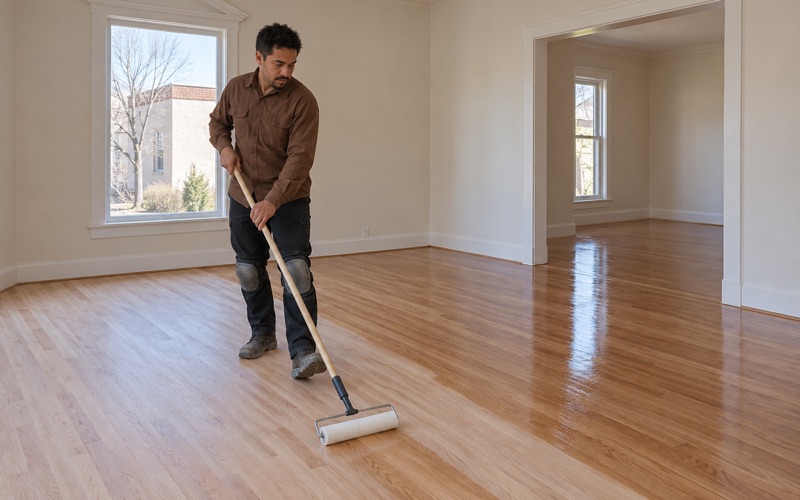
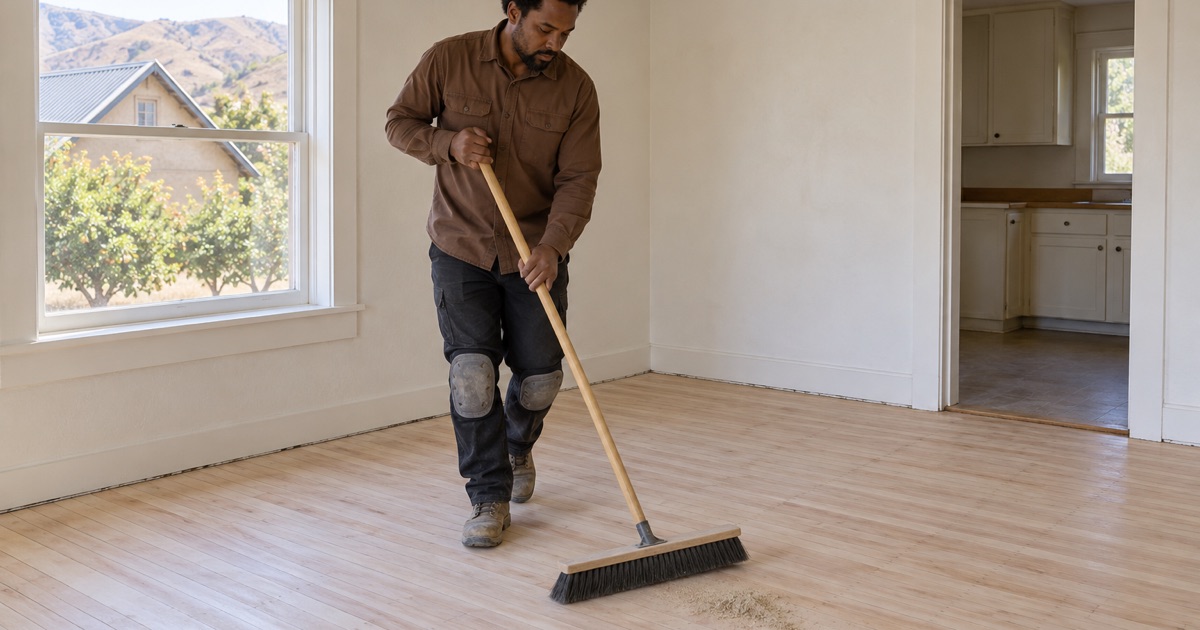
In practice that shapes the whole refinishing job. We set up containment before the first pass with the drum sander, run a dustless sanding system, and clean to a standard the owner can see before any new coat goes on. Owners who have lived with an old floor for years usually care more about getting it right than getting it done fast, and this is where that patience pays off.
Floor Furnace Openings and Wall Heaters
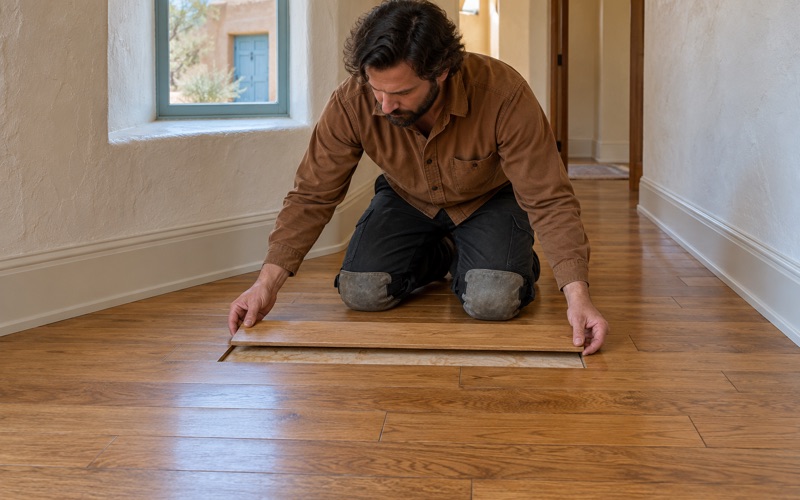
Older houses may still show where a floor furnace or wall heater once stood, and removing that equipment leaves a hole in the floor. We patch those openings with boards woven into the existing floor, so the repair follows the board pattern rather than reading as a square patch. Before any patch goes in, we check the framing under the opening, since the joists around an old furnace cut are not always intact. The same weave-in approach helps where an addition meets an older room and the two floors need to read as one surface.
Dry Air, Gaps and Winter Squeaks
Chimayo falls in the National Weather Service’s Espanola Valley forecast zone, and dry indoor air is a steady theme in the older houses we see. When a floor shows board gaps, checking or squeaks in winter, we treat it as a relative humidity question before a carpentry one. We measure, explain what the wood is doing, and leave the owner a written indoor humidity target instead of a guess.
Wood gives up moisture until it reaches equilibrium moisture content with the air around it, and an older house with little humidity control can pull a floor well below the level it was milled at. Sometimes the fix is a whole-house humidifier and a season of patience rather than new boards. When replacement is the right call, we time it so the new wood has settled before the heating season starts.
Starting a Floor Project in Chimayo
A project here starts with a visit and a set of measurements. We would rather tell an owner that an existing floor can be saved than sell material the house does not need. From there, the steps below shape the estimate and the schedule.
Chimayo lies roughly 25 miles north of Santa Fe, so we plan visits and deliveries with the drive in mind. Material is staged so an acclimation period is never cut short to save a trip. The schedule is set with the owner before the first board arrives.
Readings Before Material Is Ordered
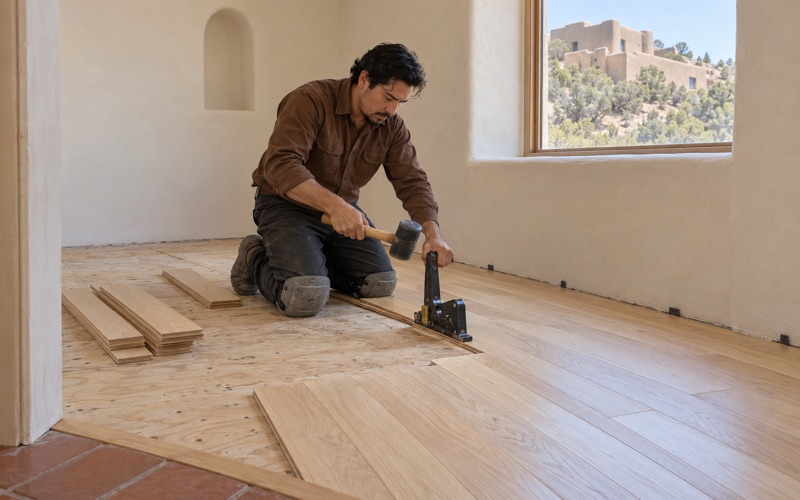
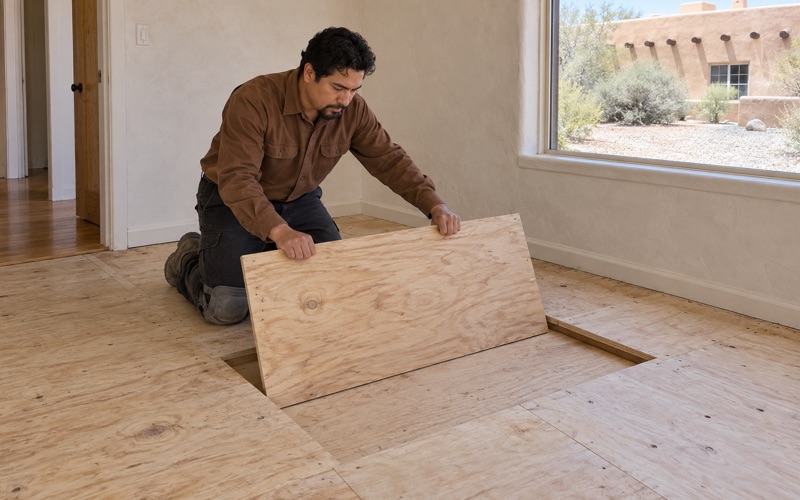
We measure moisture in the wood, the subfloor and any concrete before anything is ordered, and every reading is written down. Over a concrete slab that can mean a calcium chloride moisture test or an in-situ relative humidity test, and over a plywood subfloor it means comparing wood moisture meter readings between the subfloor and the new boards. Reclaimed and wide plank wood is acclimated to the house first, so boards milled somewhere wetter do not open up in the first winter.
Radiant Heat and Tile Transitions
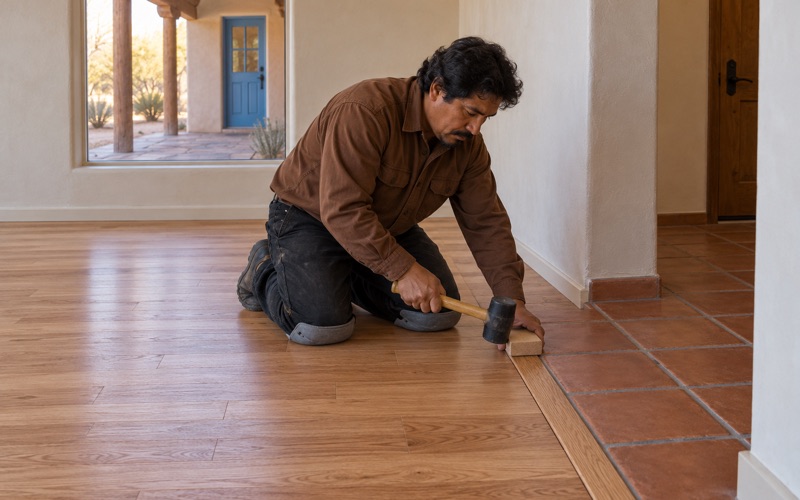
Where a house has hydronic radiant floor heating, we plan the wood to the NWFA radiant heat guidelines. Those guidelines cap the floor surface at 80 degrees Fahrenheit and limit temperature changes to 5 degrees a day, which rules out a setback thermostat on that system. Where wood meets Saltillo tile, brick or flagstone, we plan the transition so the doorway has no lip and no gap.
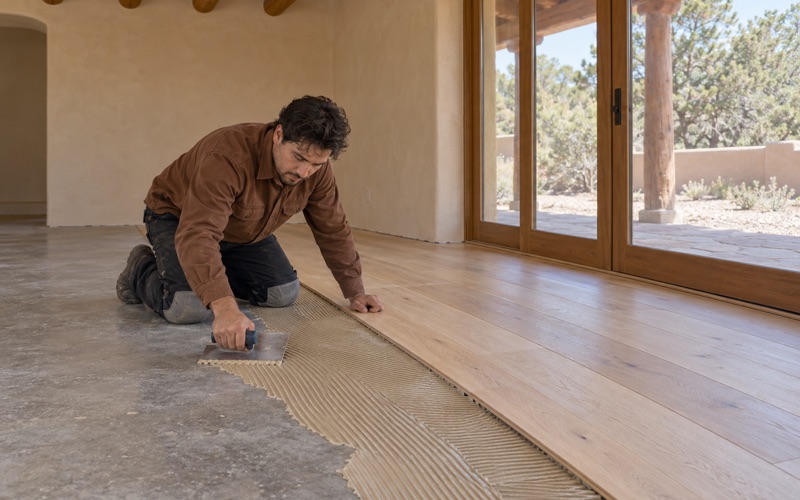
The flooring itself matters over radiant heat. We generally lean toward engineered core construction with a sensible wear layer thickness, because it tolerates heating cycles better than wide solid boards, and we choose a glue-down or floating installation to suit the slab. We walk the owner through the thermostat limits before the job starts, since the floor only lasts if the system is run within them.
Finishes and Leaks in an Occupied Home
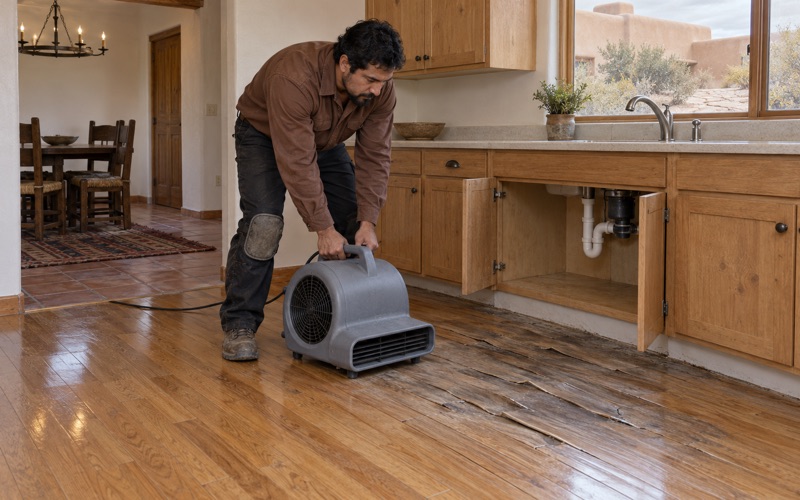
Floor work in Chimayo usually happens with the owner still living in the house. We choose finishes that meet the federal architectural coatings VOC limits and offer low-odor waterborne options for rooms that need to be back in use quickly. If a leak has damaged a floor, including a leak in a radiant heat line, we trace it to its source and document it with photos and moisture readings an adjuster can use.
We also tell the owner in writing when each room can take foot traffic, furniture and rugs again. Waterborne polyurethane, oil-modified polyurethane and hardwax oil finishes each cure on their own timeline, and the right one depends as much on how the house is used as on how it looks.
- 20+ Years Experience
- Written Moisture Readings
- Itemized Written Estimates